The Venice that's not always Venice in 'Primavera'
ART AND LOCATIONS: CINEMA IN DETAIL
Primavera, directed by Damiano Michieletto, is the story of young Cecilia and her teacher, Antonio Vivaldi. Set in early eighteenth-century Venice, it is loosely based on the novel Stabat Mater by Tiziano Scarpa (2008), winner of the 2009 Strega Prize (trailer).
The actors, including the talented Tecla Insolia, Shooting Star in Berlin 2026 - in another schoolgirl role after The Art of Joy (Golino 2024) -, and Michele Riondino as the great musician, move through places on the Venice lagoon that provide various inspirations for this article, especially because they are not always easily recognizable. In some cases, there are even some hidden tricks that production designer Gaspare De Pascali is going to kindly reveal for us.
For example, the first sequence is set in the cloister of the Pio Ospedale della Pietà, a place that was simultaneously convent, orphanage, and conservatory, like many institutions in other cities at the time. It is no coincidence that the word "conservatory" originally referred to these places that "conserved" orphaned, abandoned, or poor children, providing them with an education and teaching them a trade, including music, between the 16th and 18th centuries.
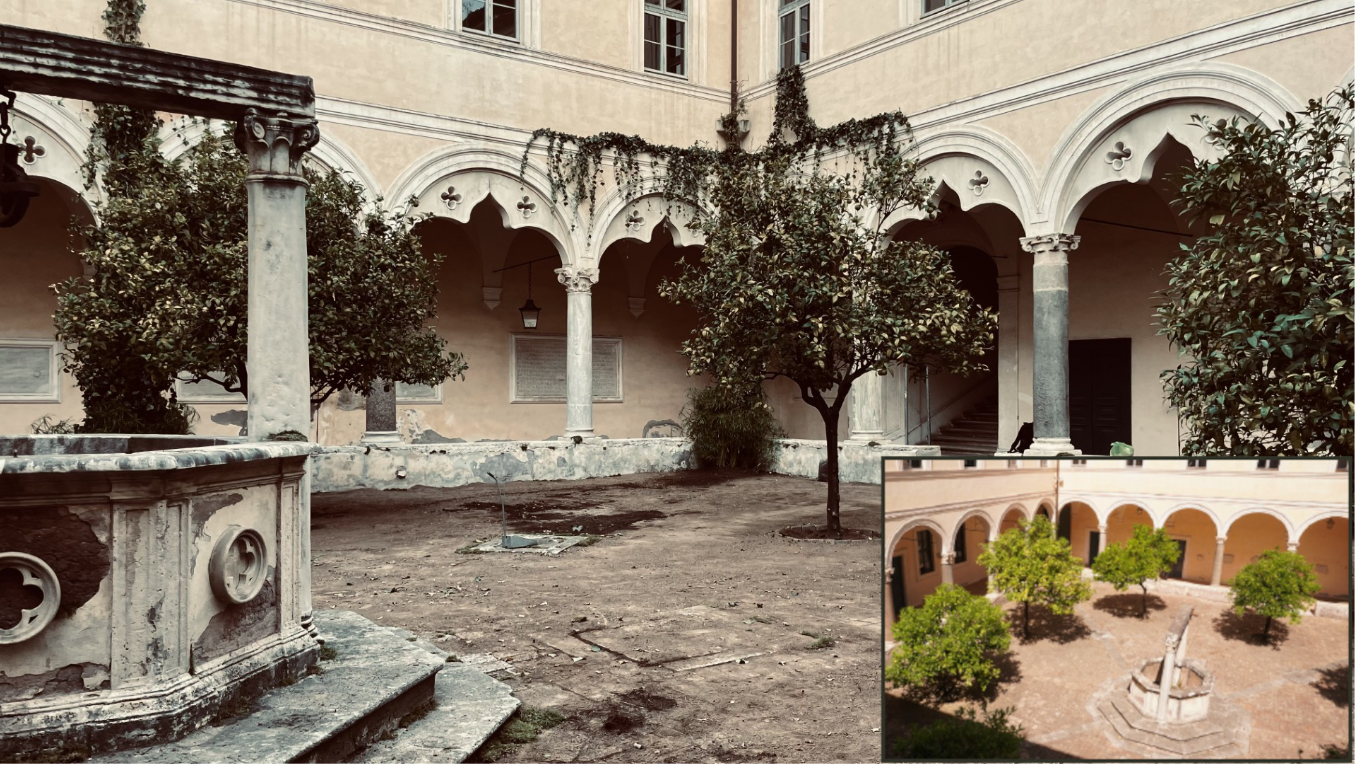
While the Pio Ospedale della Pietà had music teachers such as Vivaldi and Francesco Gasparini, they certainly never strolled through the cloister which appears several times in the film, because it doesn't actually exist. It is actually the result of a great set design project that transformed the Roman cloister of Sant'Alessio on the Aventine Hill (the Basilica of Saints Boniface and Alexis) into a Venetian setting complete with Moorish arches.
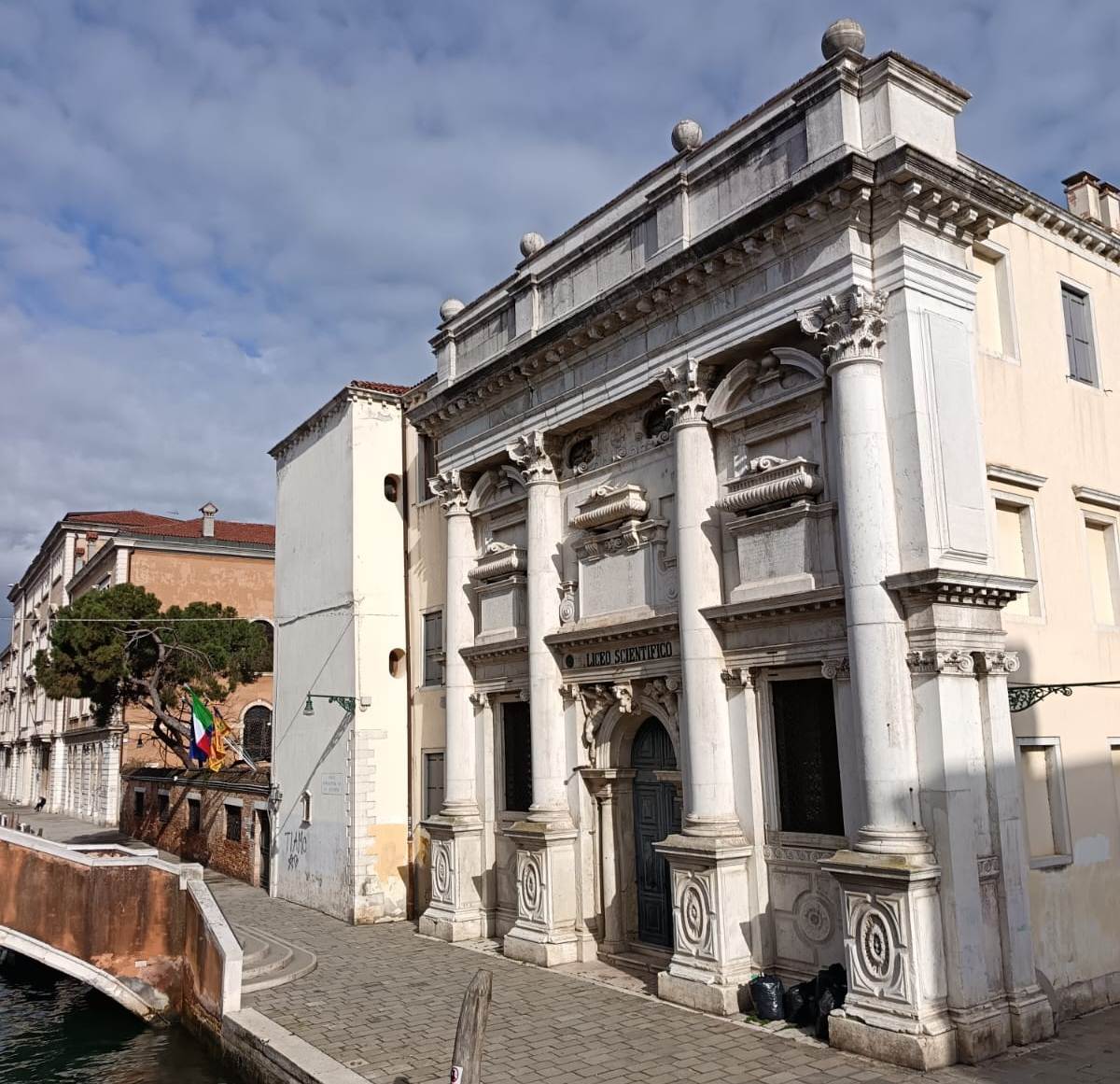
The Pietà is also seen from the outside, most clearly in one of the final scenes, during a concert organized to celebrate the capture of Corfu by the Venetian Republic. This event places the novel and film at a specific historical time, as the siege of the island by the Ottoman Empire took place from 8 July 8 –21 August, 1716. In this case, the institution is "interpreted" by another Venetian building, the Church of Santa Giustina in the Castello district, founded in the Middle Ages and deconsecrated in 1810. Its gigantic façade, with four large Corinthian columns marking the spaces and supporting a large architrave, was designed by Baldassarre Longhena (1640) and is clearly recognizable as the concert goers rush from the adjacent Ponte delle Fondamenta di Santa Giustinato the portal.
Why were all these expedients adopted to represent the ancient Ospedale della Pietà in the film?
In brief, it is because the institute (also known as Santa Maria della Pietà) located on Riva degli Schiavoni in the Castello district (very close to the Dalmatian School of San Giorgio which houses Vittore Carpaccio’s masterpieces of the Stories of Saints Jerome, George, and Tryphon (1502-1507)), was impossible to use as a location having been completely transformed in the years following the time of the film.
The Church of the Pietà, overlooking the sea, was designed by Giorgio Massari and built between 1745 and 1760, while the façade was completed as recently as 1906, albeit to theoriginal drawings of the Venetian architect.
The Ospedale, meanwhile, was founded in 1346 by the Franciscan monk, Petruccio of Assisi, who, according to contemporary accounts, collected alms for abandoned children in the city, crying "mercy, mercy". Part of its original footprint now housesthe hotels which flank it, the Hotel Metropole and the Hotel Locanda Vivaldi, whose name is now the only connection to the ancient history of the place.
The only scene filmed in a noble palace is a long sequence featuring characters laughing, joking, playing blind man's bluff, and attending a small chamber concert in the presence of the King of Denmark (Frederick IV, who ruled from 1699 to 1730). The location is Palazzo Taverna, which is not positioned on the Grand Canal as it seems but actually stands in the heart of the Ponte district of Rome. Here Elisabetta (Valentina Bellè) is chased through the halls of the baroque wing until she reaches doors with marine decorations. The concert features a wonderful duet from Cecilia and Antonio Vivaldi anda performance by the girls of the institute, in classic Venetian masksthat hide their identity, and the water of the canal scan be seen through the windows, thanks to the magic of blue screen technology.
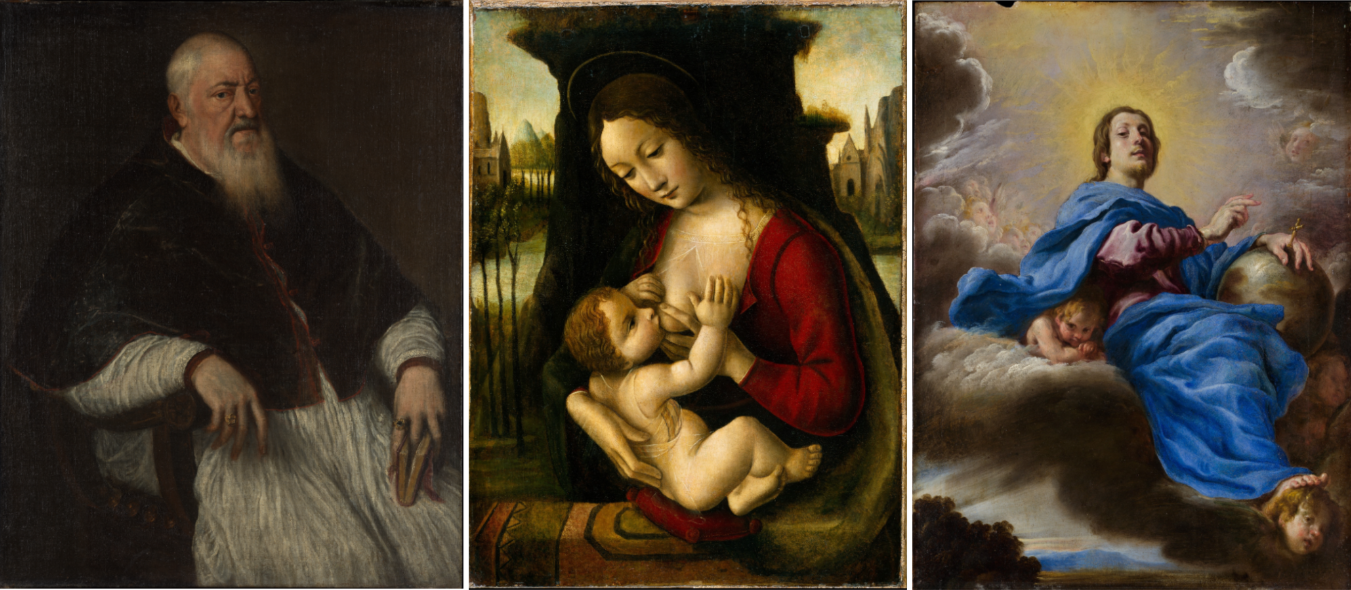
A final historical-artistic element requires analysis before bringing this article to a conclusion: these are the paintings that decorate the rooms, seen in some scenes. Once noted, they reveal the in-depth work of the set design team who sourced them from the Metropolitan Museum of New York. Above the fireplace in the room at the institute where suitors go to select a future bride is the Portrait of Filippo Archinto, perfect for a Venetian context given that it was painted by Titian c. 1550 for the Archbishop of Milan, a member of the Council of Trent with a staunchly anti-Protestant position. Bernardino dei Conti's Madonna and Child, a panel painting dated to the late 15th/ early 16th century, which is more Lombard and Leonardo-inspired, is seen while Cecilia is watching Antonio Vivaldi working in the trance in the church. Below the latticed screen of the choir stalls where the convent's musicians (the"Figlie del Choro”) perform, is the altar with a large painting of Salvator Mundi. This is a reproduction of a panel by Baroque painter Domenico Fetti (Rome 1589–Venice 1623), also known as "il Mantovano" because of his time spent in the Lombard city of Mantua, painted c. 1622/23 in Venice for Count Francesco Gambara of Brescia. It goes without saying, but, even here, the grand setting for these scenes is actually in Lazio, at the Church of St. Peter the Apostle in Vicovaro Mandela, northeast of Rome. Again, thiswas expertly modified by the remarkable work of Gaspare de Pascali, whom we thank again for revealing these enigmas. With the recent nomination of Primavera for a Best Production Design David di Donatello, we also wish him the best of luck.
In all these cases, the film’s presentation of Venice is actually revealed to be another place, whether Rome or her surroundings, and also, in some way, New York, all of which heightens the feeling of a game of hide-and-seek, which this article has attempted to play for our readers.
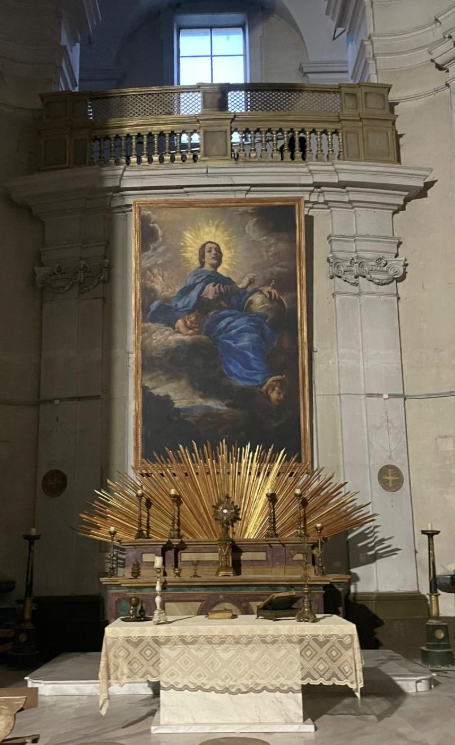
by Domenico Fetti (Met Museum) - © Gaspare de Pascali
You can read: