Giornate degli Autori: Nicola Sorcinelli's 'Balcanica' in competition. All the Italian films
As part of the 83rd Venice International Film Festival (2-12 September 2026), ANAC and 100autori are promoting the 23rd Giornate degli Autori with an edition that commemorates Giorgio Gosetti, the founder and driving force of this section of the festival since 2004.
This year's selection includes 1,036 works from 114 countries, including 25 world premieres, with 14 films directed by women and 13 by Italian directors: there are 10 films in competition, 1 closing film out of competition, 5 special events, and 9 films selected for Notti Veneziane (produced in collaboration with Isola Edipo).
The international vocation of the section is clear as the selections span a range of territories, generations and cinematic traditions: from Australia to Switzerland, Serbia to Mexico, and Argentina to Nigeria, the latter in competition for the first time. This edition further expands the plurality of perspectives that has always characterized the section.
'Balcanica' by Nicola Sorcinelli, the only Italian title in competition
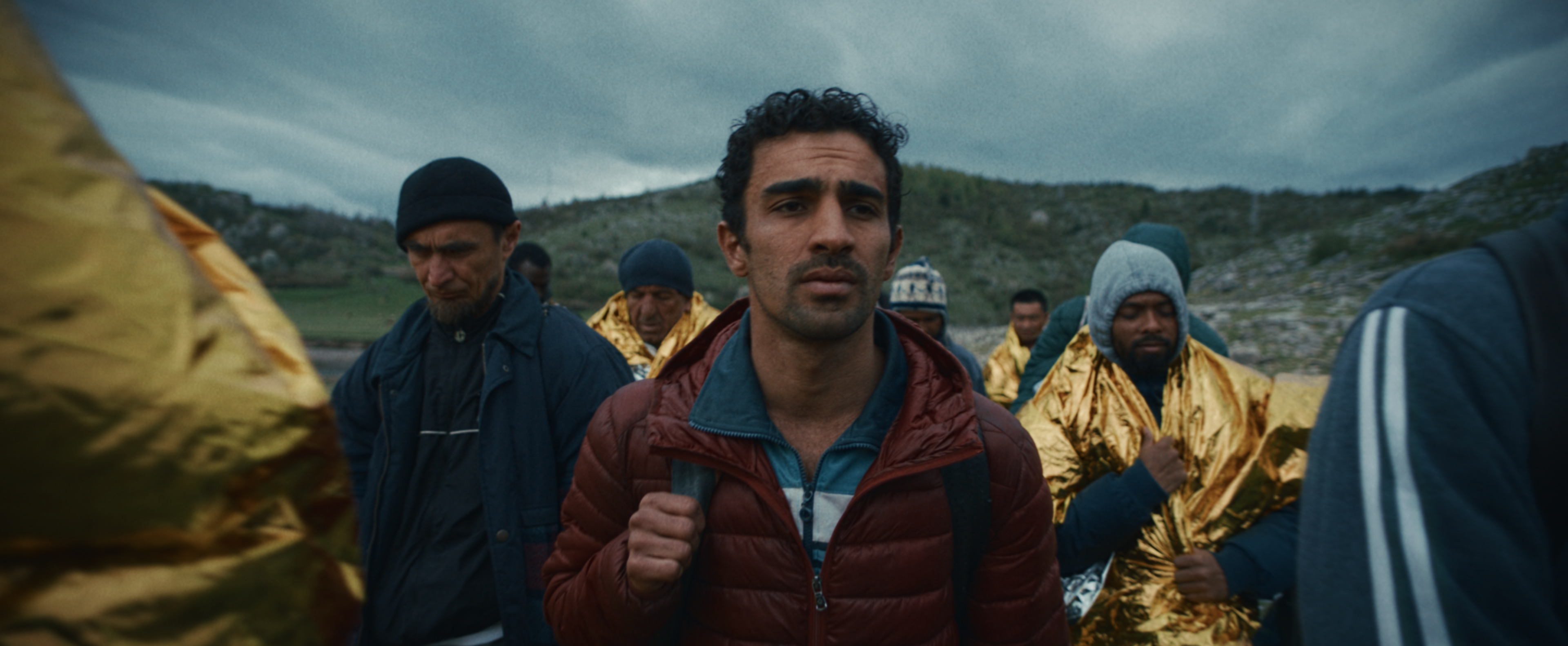
Balcanica, Nicola Sorcinelli's feature-length film debut, is about an Afghani father and son, both musicians, who escape along the Balkan route when music is banned in Afghanistan. Their journey to Europe is constellated with borders, violence, controls, and obstacles, but also by unexpected life-changing encounters. The cast includes Babak Karimi and Matilda De Angelis (who also associate produces), with Ivar Wafaei and Giovanni Toscano.
"In Balcanica, the journey becomes physical. It's dramatic; the crossing of a border is real, Sorcinelli tells the story of a father and son who escape —the father, for those who know him, is played by Babak Karimi. The story follows a father and son, both musicians in Afghanistan, who escape along the Balkan route when music is banned in their country. Their journey along the Balkan route towards Italy is marked by violence, obstacles, and challenges, but also by unexpected, potentially life-changing encounters that were never even hoped for. They meet a person who will change their fates, a doctor played by Matilda De Angelis" explains artistic director Gaia Furrer.
Balcanica is a co-production Italy-Serbia-Croatia co-production, produced by Nightswim and Wildside. The screenplay is by Sorcinelli with Andrea Brusa.
Une Femme Aujourd’hui by Robert Guédiguian is a French-Italian co-production in competition at the GdA, produced by Agat Films with Bibi Film, Arte France Cinéma. Filmed in France, it is the story of Juliette who, at thirty-five, seems to have it all: a high-profile job in the financial sector, a beautiful home, and a life of constant travel. Although her mother hopes for grandchildren, Juliette's nights are filled with fleeting lovers. When she is attacked by a colleague during a company event, her world falls apart. Juliette decides to embark on a new journey to find meaning in her life. The cast includes Marilou Aussilloux, Ariane Ascaride, Jean-Pierre Darroussin, Grégoire Leprince-Ringuet, Gérard Meylan, and Lola Naymark.
Special Events at the Giornate
Produced by Fandango, Luce Cinecittà, and Rai Cinema, Francesca Archibugi presents a special event "Carla Lonzi, dentro e fuori dal mondo": a documentary that brings to the big screen the public and private story of Carla Lonzi, a key figure in twentieth-century Italian feminism, whose thoughts and legacy are essential to understanding what women around the world are still experiencing and fighting today. Carla Lonzi was an activist, essayist, established art critic, and founder of the radical feminist movement "Rivolta Femminile."
The Special Events also include "Il massacro" by Cosimo Messeri, produced by Kaplan and written by Messeri. After years of creative inactivity, crushed by the failure of film projects that founder on the verge of production, a director (Cosimo Messeri) decides to confront his most recent past. He tracks down the women he met on dating apps during that particular moment in his life. Flanked by two friends, he interviews them, transforming this experience into a film that oscillates between documentary and personal confession. As he reels through encounters, memories, and often painful confrontations, the portrait emerges of a man grappling with failure, missed chances and the need to rediscover meaning. In trying to understand what he has lost and what he can still save, he discovers something he hadn't thought of: the chance of starting over. Cinema unexpectedly returns to his life as a tool for understanding the world and rediscovering a profound love for life.
"In Il massacro, director Cosimo Messeri transforms an existential crisis and an investigation into his encounters on dating apps into a broader story about loneliness, both professional and romantic, desire and the fragility of contemporary relationships. It's a film that combines documentary and fiction with irony and a lightness of touch, accompanied by music composed by Messeri himself. The director puts himself on the line in front of the camera, giving voice to the people he meets and transforming a very personal experience into a shared reflection about starting again" explains Furrer.
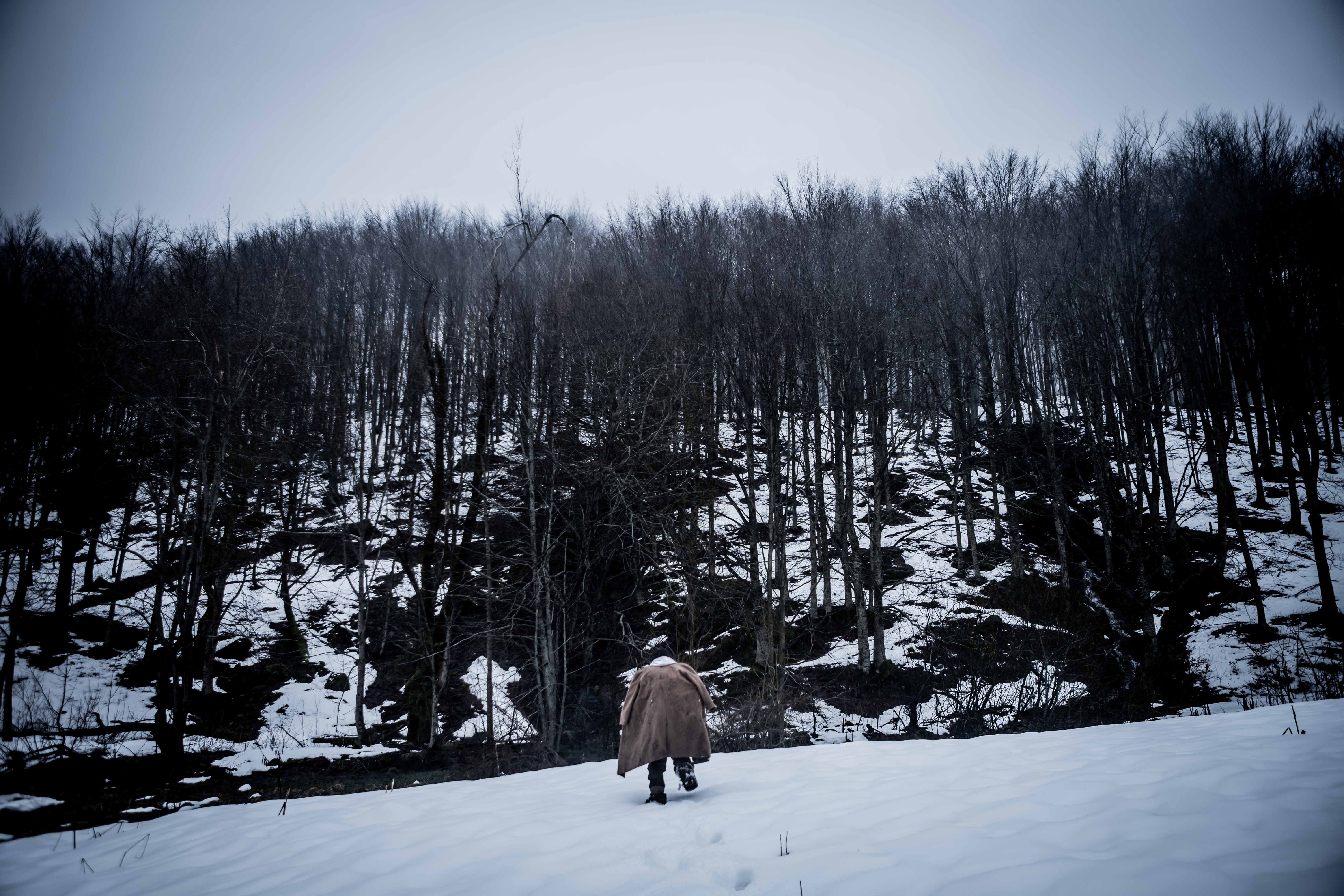
The third Special Event is Se venisse anche l'inferno by Samuele Rossi, who wrote the screenplay with Lorenzo Bagnatori; produced by Echivisivi with Solaria Film and Mo-Net. The film, shot over 3.5 weeks in 2025 and 2026 with a crew of 26, uses locations in the Aosta Valley, Fanano in Emilia-Romagna, and Abetone in Tuscany (see "On Set") and stars Luca Tanganelli, Giorgio Colangeli, Giusi Merli, Ivan Franek, Luca Vergoni, Stefano “Cisco” Bellotti, Alice Vierin, Giada Bessone. The film is set in the winter of 1944, during the darkest moment of WWII for Italy. The country is split in two. Battles rage everywhere. Caught in the midst, the population is devastated by cold, hunger, and brutal roundups. In the Alps, near the escape routes to Switzerland, a young partisan (battle name Gio) survives a violent ambush that wipes out his team. Instructions from the lowland command are clear: guard the refuge and do everything to survive while awaiting the Allied advance and the return of fighting in the spring.
Luigi Lo Cascio stars at Notti Veneziane with 'Il mestiere'
Il mestiere, Beppe Tufarulo's debut film starring Luigi Lo Cascio, Claudia Potenza, Riccardo Maiello, George Li Tournaire, and Massimiliano Rossi, will be presented in the Notti Veneziane section of the Giornate. Shot in Calabria over three weeks, locations include Crotone, the Cutro gullies, and the Lamezia Terme pier (with support from the Calabria Film Commission) and in Jesi, Marche. The film traverses an uncharted South, an atmosphere positioned at the intersection of noir, fable, and moral parable, with the story of Sauro Cantafame (Luigi Lo Cascio) who "fixes" the dead to allow families to continue collecting their pensions. It presents the portrait of a territory where the boundaries between survival and illegality, reality and invention, are continually blurred (news).
Il mestiere is a Mad Entertainment, Dude Originals, and Art of Panic production in collaboration with Rai Cinema, co-produced by Umedia and Rosebud Entertainment Films in collaboration with uFund.
'Mare Mosso' premieres in the "Confronti" section
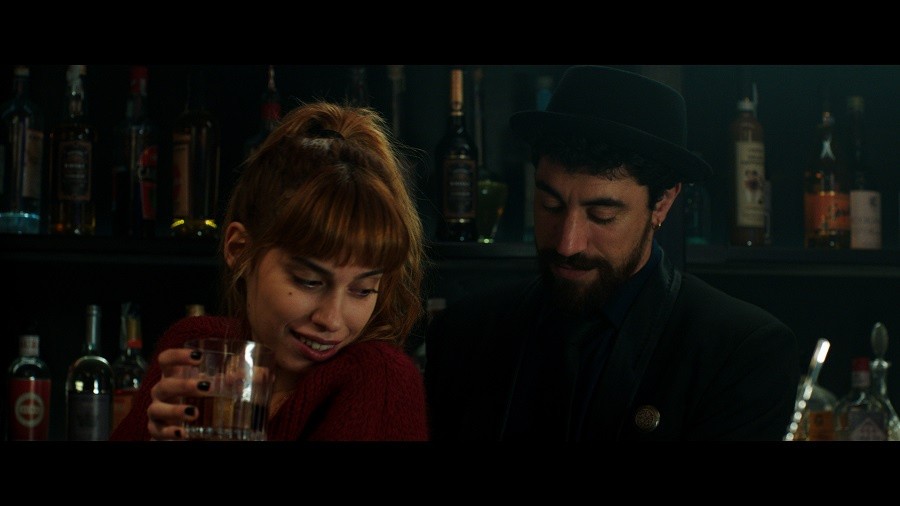
Mare Mosso, written and directed by Roberto Cimpanelli and starring Eduardo Scarpetta and Beatrice Fiorentini, will be presented in the "Confronti" section of the Giornate degli Autori.
The film, produced by Master Five Cinematografica and Life Cinema with Rai Cinema, is an existential noir about guilt and innocence, destiny and the desperate will to live. The cast includes Antonio Bannò, Eva Cela, Rosa Diletta Rossi, Pierluigi Gigante, Romano Talevi, Simone Borrelli, and Federico Majorana, with the participation of Andrea Sartoretti.
Mare Mosso is the story of Daniela (Beatrice Fiorentini), a young woman who bears the wounds of a tormented past. Daniela is a lesbian, a drug addict, and beautiful. Fate leads her to work as a bartender at Pachanga, a seedy club in Ostia, where she meets Massimo (Eduardo Scarpetta), the venue's pianist. He, too, hides unspeakable secrets behind a talent that has earned him the nickname "Golden Hands". They seem to find refuge and a chance for redemption in each other. But one December night, Daniela sees something she shouldn't have in the freezing coastal air and so seals her fate: there's only Massimo by her side, and now someone is coming to kill them both.
The film was shot in six weeks (February-March 2026) on the coast of Rome with a crew of 65 (see "On Set").
***
The 23rd edition of the GdA is made possible thanks to the collaboration with the Venice Biennale and the support of the Directorate-General for Cinema and Audiovisual of the Ministry of Culture and SIAE, which, in addition to awarding the Andrea Purgatori Lifetime Achievement Award and the Creative Talent Award, is also the Main Sponsor of the event this year, and promoting related initiatives that will continue after the Festival.
The splendid collaboration with Miu Miu, embodied by the Miu Miu Women's Tales project, continues in 2026, while a partnership with Laser Film will be inaugurated. There are many long-time partners who stand beside the Giornate, each with specific projects. In this unique year, we would like to thank them all: the Institutional Partners - Europa Cinemas, IULM, Regione del Veneto, Veneto Film Commission, and the Writers Guild Italia; Media Partners - Cinecittà News, Cineuropa, FRED, Cinematografo, Taxi Drivers, and MYmovies; and Technical Partners - Sub-Ti, Frame, L'eco della stampa, Infinity Road Pictures, and L'image.
Special thanks go to the members of the Associazione Giornate degli Autori and the Board of Directors who passionately and generously support the editorial approach; to the magnificent staff who, with passion and dedication, make this unique event possible every year, to the students from Bari, Rome, Bologna, Milan, and Venice who share in the work and experience of the Film Festival; and to the AFIC, of ??which the Giornate is a founding member.