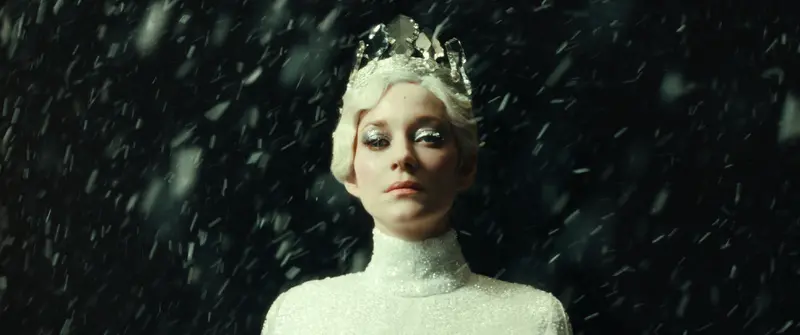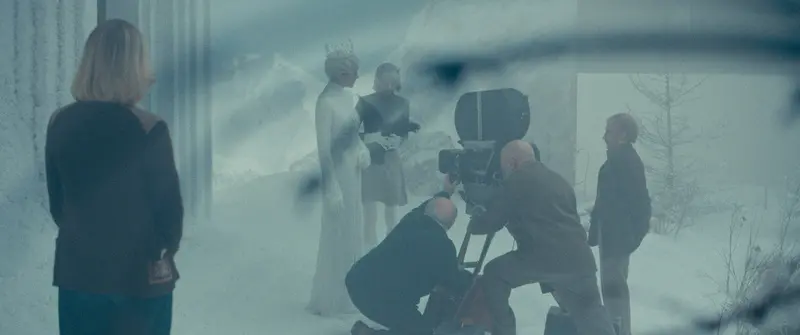
La Tour de Glace is a French-German co-production – 3B Productions and Davis Films, Sutor Kolonko, Arte France Cinéma and Bayerischer Rundfunk in collaboration with Arte. Some of the film’s most evocative scenes were shot in the mountains of South Tyrol, immersing the viewer in an atmosphere balanced between dream and nightmare and creating an almost metaphysical place where cinema and reality intertwine as if in a game of mirrors.
Filming in Italy took place in some of the most fascinating places in South Tyrol, chosen for the enchanting, fairy-tale atmospheres they provide. Locations included: Caldaro and lake Caldaro, an almost surreal body of water that is shrouded in fog in winter, providing an atmosphere suspended in time, the ideal place to accentuate a sense of isolation and mystery; Merano, famous for its aristocratic past and art nouveau buildings; Bolzano, the South Tyrolean capital, with its mix of Central European architecture, historic alleys and natural settings; and Magré sulla Strada del Vino, a small village with ancient charm, featuring stone streets and historic houses which were used for some of the film's most intimate sequences.
The production of the film was supported by IDM Film Commission Südtirol for filming in South Tyrol, service provided by locally-based Albolina Film.
La Tour de Glace is a French-German co-production – 3B Productions and Davis Films, Sutor Kolonko, Arte France Cinéma and Bayerischer Rundfunk in collaboration with Arte. Some of the film’s most evocative scenes were shot in the mountains of South Tyrol, immersing the viewer in an atmosphere balanced between dream and nightmare and creating an almost metaphysical place where cinema and reality intertwine as if in a game of mirrors.
Filming in Italy took place in some of the most fascinating places in South Tyrol, chosen for the enchanting, fairy-tale atmospheres they provide. Locations included: Caldaro and lake Caldaro, an almost surreal body of water that is shrouded in fog in winter, providing an atmosphere suspended in time, the ideal place to accentuate a sense of isolation and mystery; Merano, famous for its aristocratic past and art nouveau buildings; Bolzano, the South Tyrolean capital, with its mix of Central European architecture, historic alleys and natural settings; and Magré sulla Strada del Vino, a small village with ancient charm, featuring stone streets and historic houses which were used for some of the film's most intimate sequences.
The production of the film was supported by IDM Film Commission Südtirol for filming in South Tyrol, service provided by locally-based Albolina Film.
3B Productions, Davis Films, Sutor Kolonko, Arte France Cinéma, Bayerischer Rundfunk
1970s. Drawn to the city lights in the valley below, sixteen-year-old Jeanne runs away from a mountain orphanage. She hides in a film studio that she explores at night. During the day, the studio is the location for a film, The Snow Queen, starring the enigmatic Cristina. Jeanne immediately falls under the spell of the beautiful, tormented star. Jeanne gradually begins to play an increasingly important role in the film. As her obsession with the Snow Queen's kingdom grows, film and reality, set and screen merge in a magical, labyrinthine game. But there is a price to pay. Does Jeanne love the Snow Queen enough to make the sacrifice she demands?