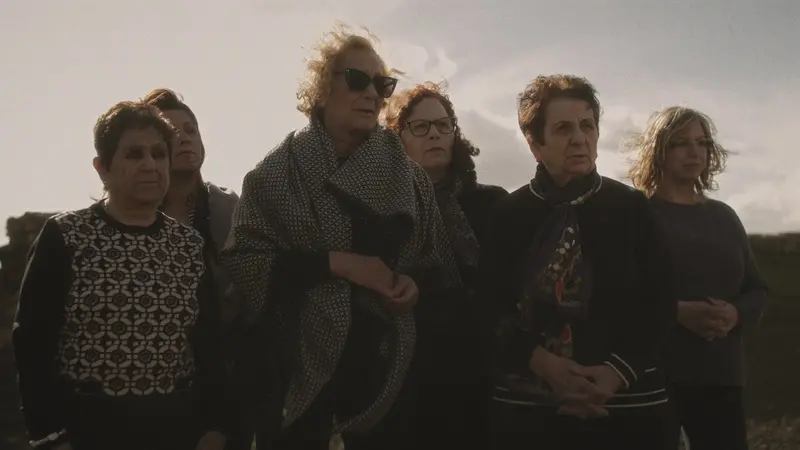
Il Quieto Vivere is the story of a family war, and not just any family – the director's own. The main characters in the film, directed by Gianluca Matarrese and co-written by him with Nico Morabito, are his own cousins, the sisters-in-law Maria Luisa Magno and Imma Capalbo, his mother Carmela Magno, Aunts Concetta and Filomena, cousins Sergio Turano and Giorgio Pucci, and all of his relatives in the area.
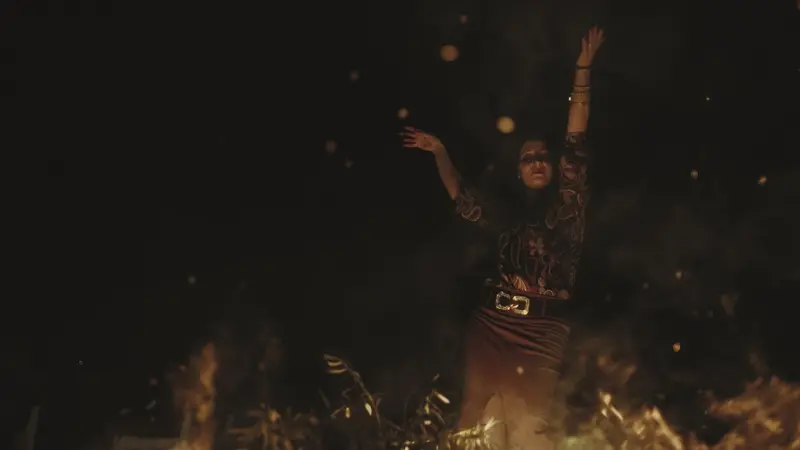
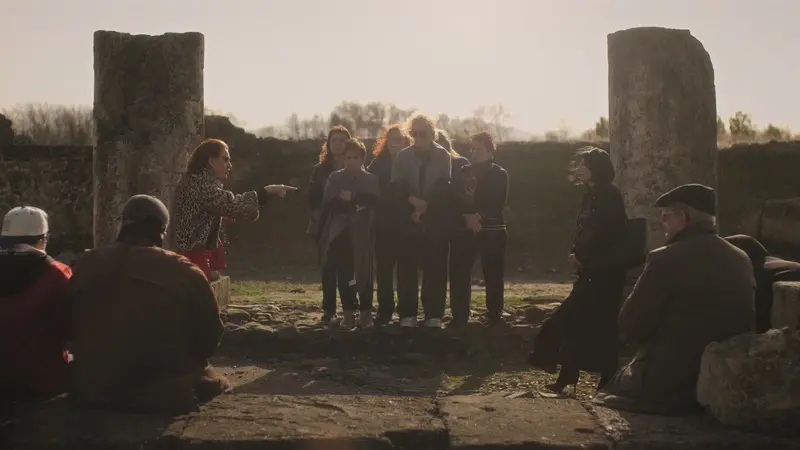
The settings are also those of the director's hometown in Calabria. The Calabrian village of Il Cozzo, where the director's family lives, provides the real-life setting that serves as the backdrop to the entire story. The setting for the film's fictional scenes, the prologue and epilogue, was the Roman theatre in the archaeological park of Sibari.
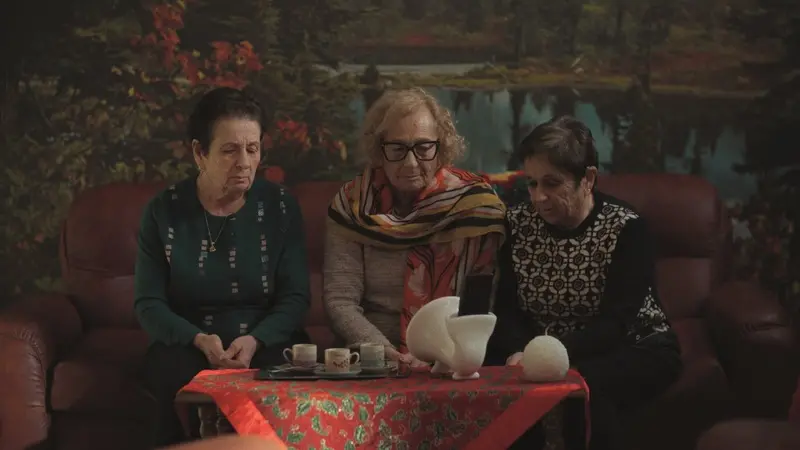
Il Quieto Vivere was shot entirely on location, bucolic shots of the countryside alternate with close-ups of interior spaces such as the family’s residence - site of the long-running war between the sisters-in-law, with the various courtyards and kitchens, places where the family feud is fuelled.
"The film is inspired by real people and events. 'Il Cozzo' really exists: it's where my relatives live," explains director Gianluca Matarrese. "Even though I was born and raised in Turin, my roots are in Calabria, my parents' homeland. The world I describe is an archaic microcosm, closed to external stimuli, it sustains itself with internal forces. It is populated by characters bordering on paradox, straight out of the gallery of Calabrian archetypes. These individuals find themselves experiencing absurd and bitterly comic situations, which layer farce-like tones of black comedy onto the film’s social realism. People are always shouting in Calabria, a land in the deepest south: people who make mistakes shout, people who are offended shout, people who are judged shout. Conflict is necessary to restore peace and maintain a precarious balance. All of this is sacred, because it is part of the 'quiet life'."
"I wanted to create a ‘real’ fiction with a reality cinema approach, using as a base a documentary-like experience enriched by immersive techniques from workshops with professional actors, but with non-professional actors, namely my family. A family game, conducted with rigour. It wasn't a question of placing actors in a reconstructed reality (a set) to be filmed from the outside: the process was actually reversed, specular", the director continues. "The film was shot entirely on location, making the most of the Calabrian landscape without falling into the ‘picture postcard’ trap. Attention is paid to the details that define this closed universe, alternating dirty close-ups with fixed, bucolic shots of rural nature".
Il Quieto Vivere is the story of a family war, and not just any family – the director's own. The main characters in the film, directed by Gianluca Matarrese and co-written by him with Nico Morabito, are his own cousins, the sisters-in-law Maria Luisa Magno and Imma Capalbo, his mother Carmela Magno, Aunts Concetta and Filomena, cousins Sergio Turano and Giorgio Pucci, and all of his relatives in the area.
The settings are also those of the director's hometown in Calabria. The Calabrian village of Il Cozzo, where the director's family lives, provides the real-life setting that serves as the backdrop to the entire story. The setting for the film's fictional scenes, the prologue and epilogue, was the Roman theatre in the archaeological park of Sibari.
Il Quieto Vivere was shot entirely on location, bucolic shots of the countryside alternate with close-ups of interior spaces such as the family’s residence - site of the long-running war between the sisters-in-law, with the various courtyards and kitchens, places where the family feud is fuelled.
"The film is inspired by real people and events. 'Il Cozzo' really exists: it's where my relatives live," explains director Gianluca Matarrese. "Even though I was born and raised in Turin, my roots are in Calabria, my parents' homeland. The world I describe is an archaic microcosm, closed to external stimuli, it sustains itself with internal forces. It is populated by characters bordering on paradox, straight out of the gallery of Calabrian archetypes. These individuals find themselves experiencing absurd and bitterly comic situations, which layer farce-like tones of black comedy onto the film’s social realism. People are always shouting in Calabria, a land in the deepest south: people who make mistakes shout, people who are offended shout, people who are judged shout. Conflict is necessary to restore peace and maintain a precarious balance. All of this is sacred, because it is part of the 'quiet life'."
"I wanted to create a ‘real’ fiction with a reality cinema approach, using as a base a documentary-like experience enriched by immersive techniques from workshops with professional actors, but with non-professional actors, namely my family. A family game, conducted with rigour. It wasn't a question of placing actors in a reconstructed reality (a set) to be filmed from the outside: the process was actually reversed, specular", the director continues. "The film was shot entirely on location, making the most of the Calabrian landscape without falling into the ‘picture postcard’ trap. Attention is paid to the details that define this closed universe, alternating dirty close-ups with fixed, bucolic shots of rural nature".
Faber Produzioni, Stemal Entertainment, Elefant Films, Rai Cinema
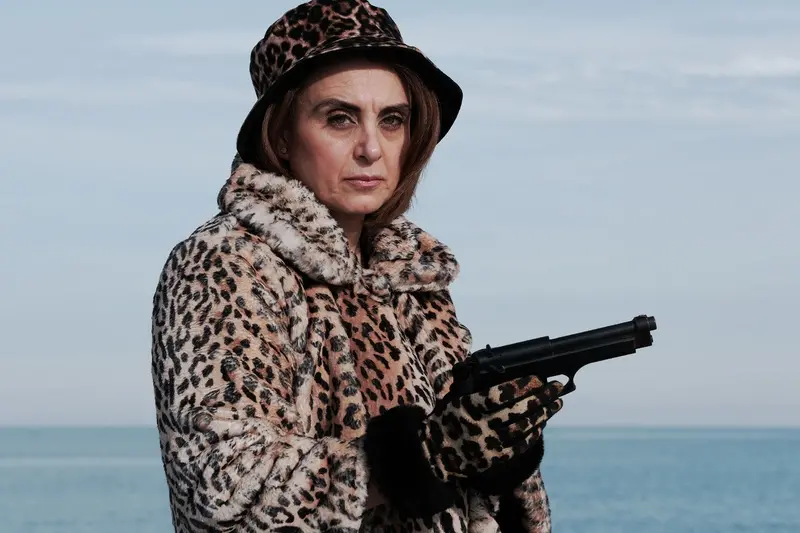
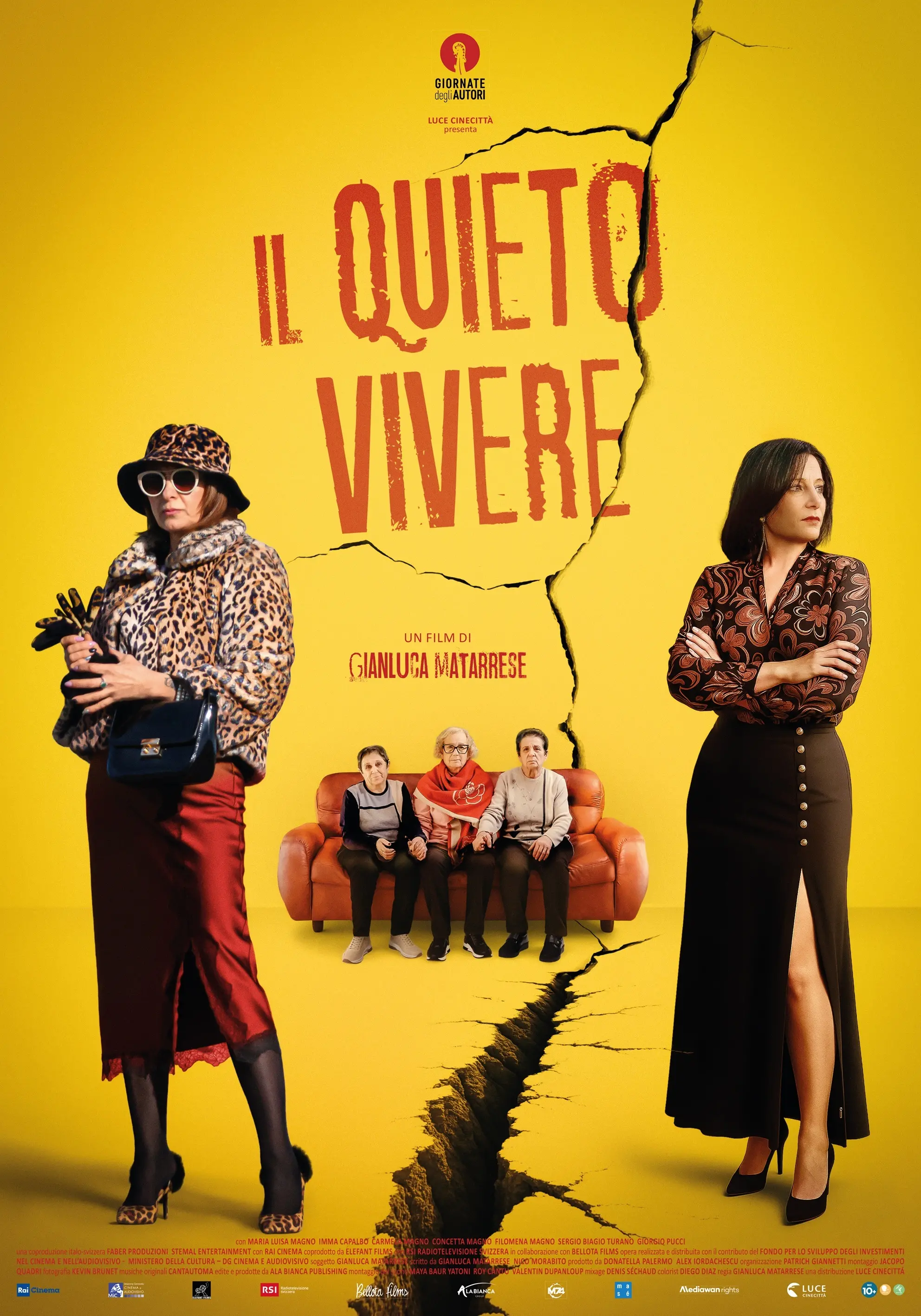
Every family is unhappy in its own way, especially those forced to live together in the same building in a Calabrian village where hatred is passed down like a legacy. The unhappiest of the family is Luisa Magno: at 50 years old, she is rebellious and unstable, a loving mother at war with everyone. She is particularly at war with Imma, her younger, prettier, more settled sister-in-law who has become an obsession. Imma, for her part, feels like the victim of unjust persecution. When Imma long-windedly describes the harassment she endures, Luisa cuts her short: Imma is just a good for nothing. While the two women battle it out, trading accusations and insults, a tragicomic chorus of three elderly aunts desperately tries to restore peace. Their attempt takes the form of a family "trial", something of a sacrificial rite crossed with group therapy and a purifying tarantella. Luisa and Imma face off in a final duel, a crescendo that blurs reality and fiction. Il Quieto Vivere is a ferocious comedy that explores the antechamber of crime: that breaking point where anything could happen.