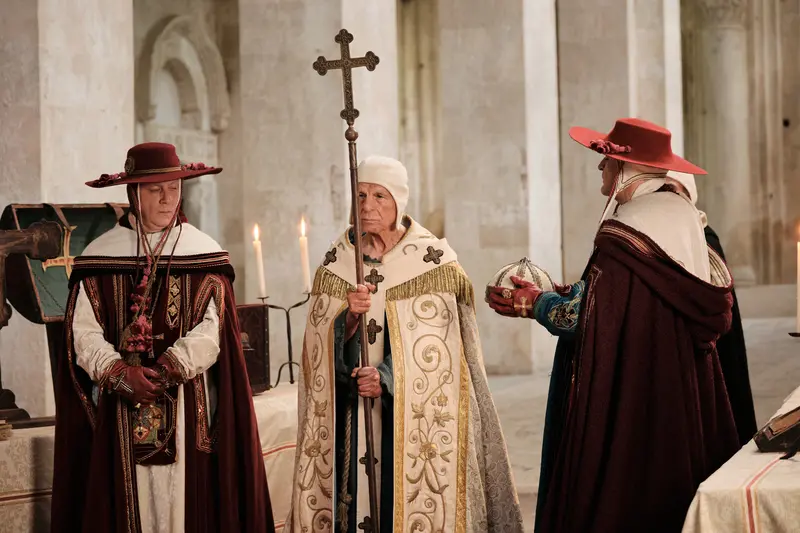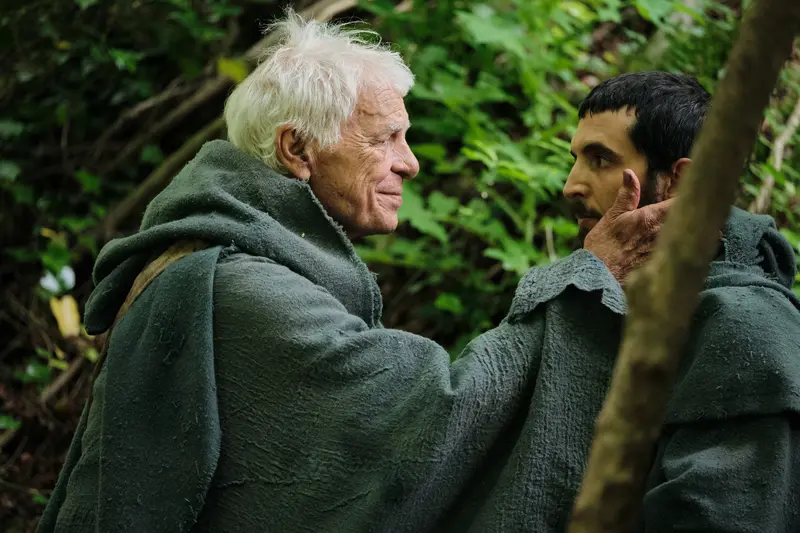
TV movie directed by Edoardo Re, Celestine V focusses on the story of Pietro da Morrone, the hermit from the Maiella who became Pope Celestine V in 1294, invented the Perdonanza – the first Jubilee in Christian history – and carried out the first voluntary renunciation of the papacy.
Michele Placido plays the Pope, alongside Tommaso Ragno (Benedetto Caetani / Boniface VIII), Giacomo Ferrara (Roberto di Salle), Fortunato Cerlino (Cardinal Colonna), Giulio Beranek (Charles II of Anjou), Paolo De Vita (Angelerio), Francesco Sechi (Francesco d'Atri), Christian La Rosa (Giovanni di Castrocielo), Antonio Greco (Tommaso d'Ocre), Jan Angelo Maestri (Jacopo), and Giovanni Scifoni (Narrator).
Filming in Abruzzo (April - early June 2026) included locations in the provinces of L'Aquila, Chieti, and Pescara, with the support of the Abruzzo Film Commission, plus on soundstages in Marino (Rome). The Abruzzo landscape – rock hermitages, Romanesque abbeys, ancient amphitheatres, the Maiella mountains, and the Adriatic coast – is a key element: the same land that Pietro da Morrone inhabited for decades before being called into history.
Abruzzo locations included: the Abbey of San Liberatore a Maiella in Serramonacesca (Pescara), the Alba Fucens amphitheatre in Massa d'Albe (L’Aquila), the Piccolomini Castle in Celano (L’Aquila), the Abbey of San Giovanni in Venere in Fossacesia (Chieti), Punta Aderci and Mottagrossa beach in Vasto (Chieti), the Hermitage of Santo Spirito in Roccamorice (Pescara), and the Spanish fort in L'Aquila.
The film is based on the book Celestino, Papa, eremita e santo by Maria Burani.
TV movie directed by Edoardo Re, Celestine V focusses on the story of Pietro da Morrone, the hermit from the Maiella who became Pope Celestine V in 1294, invented the Perdonanza – the first Jubilee in Christian history – and carried out the first voluntary renunciation of the papacy.
Michele Placido plays the Pope, alongside Tommaso Ragno (Benedetto Caetani / Boniface VIII), Giacomo Ferrara (Roberto di Salle), Fortunato Cerlino (Cardinal Colonna), Giulio Beranek (Charles II of Anjou), Paolo De Vita (Angelerio), Francesco Sechi (Francesco d'Atri), Christian La Rosa (Giovanni di Castrocielo), Antonio Greco (Tommaso d'Ocre), Jan Angelo Maestri (Jacopo), and Giovanni Scifoni (Narrator).
Filming in Abruzzo (April - early June 2026) included locations in the provinces of L'Aquila, Chieti, and Pescara, with the support of the Abruzzo Film Commission, plus on soundstages in Marino (Rome). The Abruzzo landscape – rock hermitages, Romanesque abbeys, ancient amphitheatres, the Maiella mountains, and the Adriatic coast – is a key element: the same land that Pietro da Morrone inhabited for decades before being called into history.
Abruzzo locations included: the Abbey of San Liberatore a Maiella in Serramonacesca (Pescara), the Alba Fucens amphitheatre in Massa d'Albe (L’Aquila), the Piccolomini Castle in Celano (L’Aquila), the Abbey of San Giovanni in Venere in Fossacesia (Chieti), Punta Aderci and Mottagrossa beach in Vasto (Chieti), the Hermitage of Santo Spirito in Roccamorice (Pescara), and the Spanish fort in L'Aquila.
The film is based on the book Celestino, Papa, eremita e santo by Maria Burani.
Abruzzo, 1294. Pietro da Morrone, an eighty-year-old hermit from the Maiella, founder of thirty-six monasteries, herbalist and healer, is elected Pope by an exhausted conclave after twenty-seven months of stalemate. He takes the name Celestine V. He doesn't want the throne, he doesn't know the court, he doesn't speak Latin in ceremonies: yet his brief pontificate produces two events destined to change history: the Perdonanza (the first Jubilee in Christian history) and the first voluntary renunciation of the papacy.