Situated on three hills above the Sile river, Treviso was founded in pre-Roman times. After the fall of the Roman Empire (476), it passed first to the Ostrogoths and then to the Lombards and Carolingians. In the late Middle Ages, from a commune it became as a lordship under the Ezzelini family. It was the scene of clashes between the Guelphs and Ghibellines, with the former prevailing, and from 1339 it became Venice's first mainland outpost.
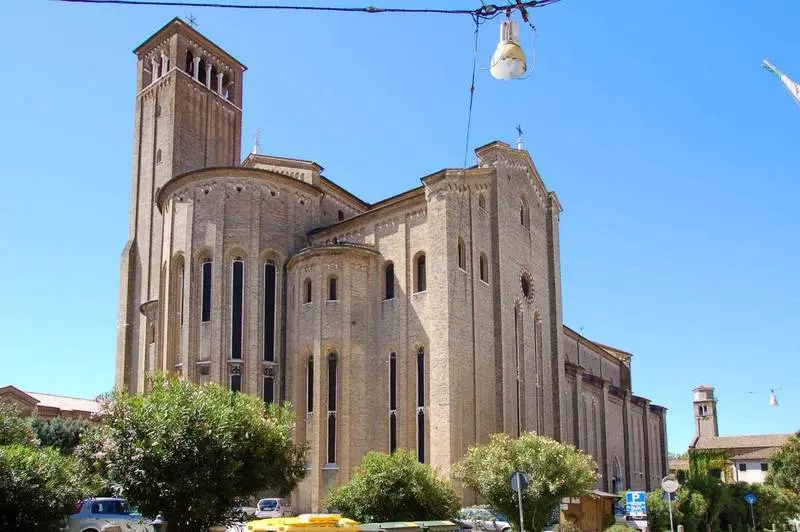
The centre of Treviso, particularly fascinating thanks to its canals which earn it the nickname "Little Venice," is characterized by buildings that give it a medieval appearance, e.g.: Palazzo dei Trecento with its battlements and triple lancet windows, all of Piazza dei Signori, the Loggia dei Cavalieri and the 13th-century churches of San Francesco and San Nicolò, and the Gothic Basilica of Santa Fosca in Santa Maria Maggiore.
Notable buildings include Ca' dei Carraresi, Ca' da Noal, Palazzo Rinaldi, and Domus Dotti V. The Venetian gates of San Tomaso and Santi Quaranta, the ancient entrances to the city, are particularly noteworthy. Outside the city walls, many villas mark the noble expansion of the Venetian republic on the mainland (e.g., Ca' Zenobio Alverà Ceccotto in Santa Bona, and Villa Manfrin (or Margherita) in Sant'Artemio).
One of the most fascinating places in the city is isola della Pescheria, a river island that, after the cholera epidemic of 1855, was remodelled to house the fish market previously in piazza dei Signori. It still houses the old watermill, "il molinetto" today.
Fondazione Veneto Film Commission
Via Carducci, 32 – 30171 Venezia Mestre
Phone: +39 041 279 43 38
Email: info@venetofilmcommission.com