I 100 anni di Andrea Camilleri – Dalla sua penna l’amore per la Sicilia
Andrea Camilleri, popolarissimo scrittore, ma anche sceneggiatore, regista e drammaturgo italiano, avrebbe compiuto 100 anni. Fu l’ideatore del Commissario Montalbano, uno dei personaggi letterari più amati in Italia e all’estero, grazie anche alla popolarità raggiunta con i film tv.
Camilleri nasce a Porto Empedocle, la “marina” di Agrigento, il 6 settembre 1925, lontano parente del conterraneo Luigi Pirandello. Avendo a disposizione le fornite biblioteche di famiglia, manifesta precocemente la passione per la lettura, in particolare per storie di avventure, polizieschi (tra tutti Simenon) e riviste teatrali.
Formazione e prime esperienze
Dopo gli studi classici, Camilleri si iscrive alla facoltà di Lettere a Palermo, ma non conseguirà mai la laurea. Si trasferisce a Roma nel 1949 per frequentare l’Accademia Nazionale d’Arte Drammatica, unico candidato ammesso alla frequenza del corso di regia (dal 1977 al 1997 sarà egli stesso titolare della cattedra da lui frequentata). È in questa fase della sua vita che sperimenta le prime esperienze da regista teatrale e, dopo l’ingresso in Rai nel 1957, anche televisivo. Dal 1958 al 1965 e poi dal 1968 al 1970 insegna al Centro Sperimentale di Cinematografia.
Nel 1978 esordisce nella narrativa con Il corso delle cose (scritto tra il 1967 e il 1968), Nel 1980 pubblica con Garzanti Un filo di fumo, romanzo in cui introdurrà per la prima volta l'immaginaria Vigata, location dei suoi romanzi storici e soprattutto delle tante indagini di Salvo Montalbano. Quest’opera varrà allo scrittore il suo primo premio letterario a Gela.
Il Commissario Montalbano e la serie tv
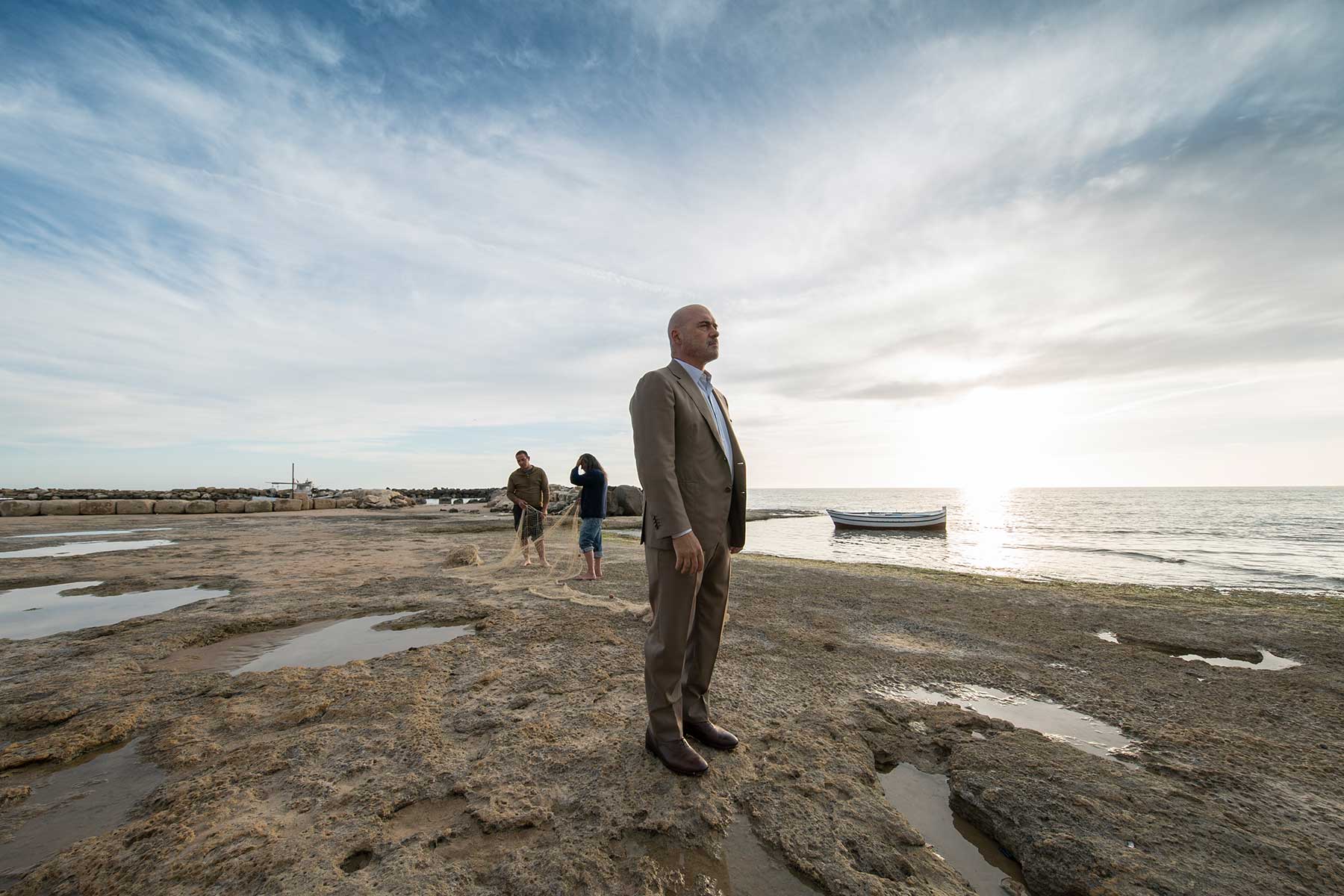
Il 1994 è l’anno della pubblicazione de La forma dell'acqua, primo poliziesco con protagonista il commissario Montalbano, che avrà nella serie televisiva il volto di Luca Zingaretti.
Era infatti il 1999 quando il produttore Palomar riadattava per la Rai i racconti di Andrea Camilleri aventi come protagonista il Commissario Montalbano per la regia di Alberto Sironi. Per oltre 20 anni i nuovi episodi e le numerose repliche hanno incontrato sempre il favore del pubblico, che ancora oggi sembra non stancarsi dei battibecchi con Catarella, dei curiosi personaggi che hanno popolato le varie indagini, delle campagne assolate circondate dal mare cristallino in cui sono ambientate.
I romanzi di Camilleri raccontano l’Italia e la Sicilia in tutte le sue sfaccettature, partendo dalla realtà e riproducendola in quel mondo di fantasia che ruota attorno a Vigata e nell’immaginaria provincia di Montelusa.
Dove si trova Vigata, location del Commissario Montalbano

Sullo sfondo il campanile della Chiesa di Santa Maria delle Scale a Ragusa. @Palomar
Vigata, Porto Empedocle nell’immaginario camilleriano, è, nella finzione scenica, un insieme di gioielli barocchi: da Ibla a Scicli, Sampieri (poco a est, sulla scogliera del Pisciotto, sorge la fornace Penna, che riconosceremo come la Mànnara), Donnalucata, Monte Crasto e il Castello di Donnafugata (la sontuosa residenza del boss Balduccio Sinagra), e poi ancora Modica, Marina di Ragusa, Comiso, Vittoria, Scoglitti, Brucoli, Noto, Scopello, e vari altri siti della Sicilia sud-orientale (qui tutte le location del Commissario Montalbano).
Il successo della serie tv è contemporaneo a quello dei suoi scritti, che inizieranno a trasformarsi in fenomeno editoriale nel 1998 con La concessione del telefono e, nell’anno successivo, con La mossa del cavallo.
Camilleri acquisisce una grande fama grazie alla diffusione dei romanzi e dei film anche all’estero dove, tradotto in 40 lingue, viene studiato e letto praticamente ovunque.
Di cosa parlano i romanzi di Camilleri
Negli oltre 110 romanzi e racconti vari, Camilleri tratta una varietà di temi che è riduttivo semplificare in argomenti storico-civili e nella saga di Montalbano (28 romanzi più racconti e raccolte). La Sicilia è tuttavia onnipresente, mentre una sua peculiarità è l’uso frequente di un linguaggio misto di italiano e siciliano.
Camilleri muore il 17 luglio 2019 all’età di 94 anni. Come da sua volontà, dopo la scomparsa dello scrittore (esattamente un anno dopo) viene pubblicato Riccardino, l’epilogo di Montalbano che l’autore aveva scritto nel 2005, consegnato all’editore Sellerio e rivisto nel 2016.
Per il centenario della nascita, l’Associazione Fondo Andrea Camilleri ha promosso un ampio programma di iniziative per ricordare e promuovere la conoscenza dello scrittore.