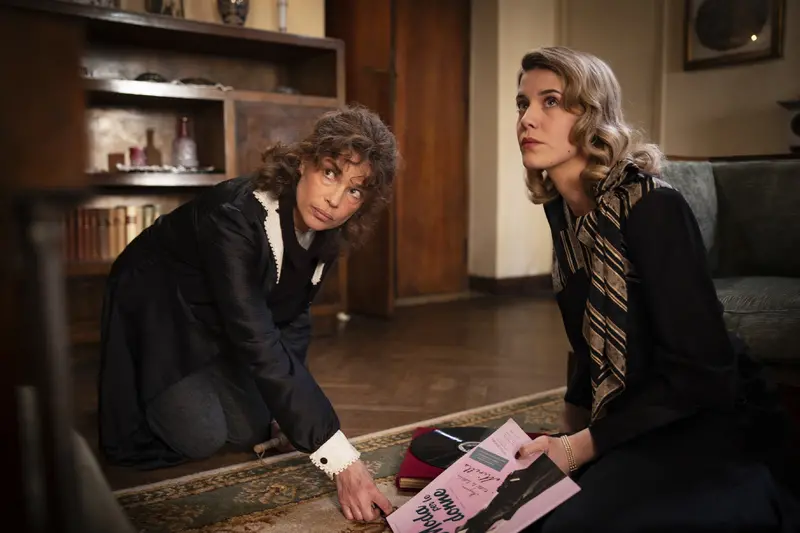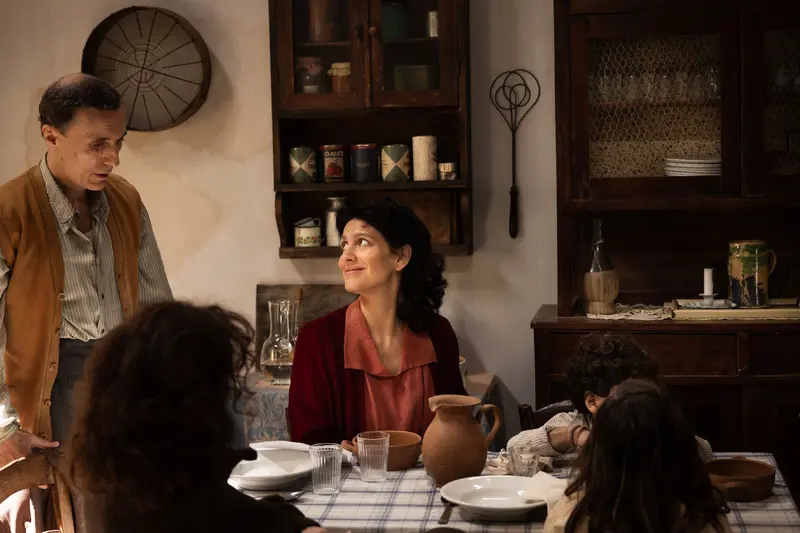
For his first feature-length fiction film, Stefano Casertano has chosen the story of Elena Di Porto, known "the madwoman of piazza Giudia", who – informed by reliable sources – tried in vain to warn the community of the impending Nazi roundup on the night of October 16, 1943.
Elena del Ghetto is set in the Roman ghetto between 1938 and 1943, the years of the inexorable rise of fascism and the horror of the racial laws. Standing on the abyss of history, it tells the story of the courage of a woman with a rebellious and indomitable temperament, played by Micaela Ramazzotti.
The five-week shoot (in February - March 2025) took place in Tivoli and the historic centre of Rome with a crew of 80.
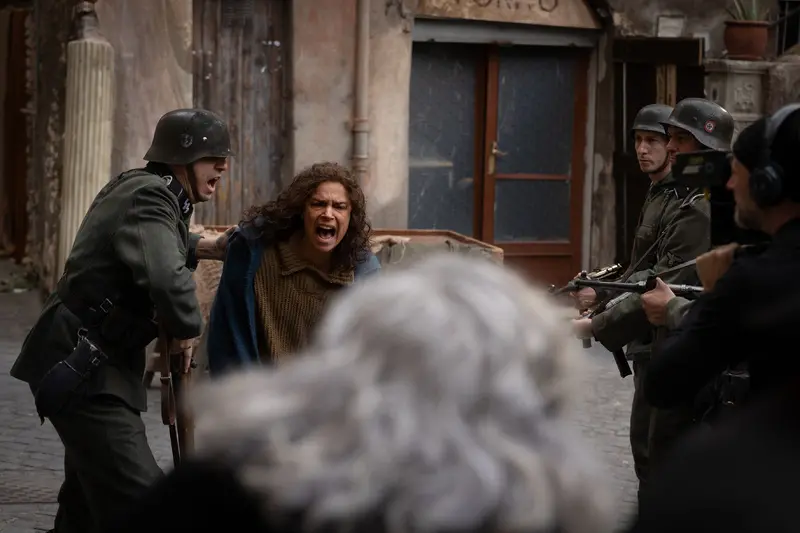
Piazza delle Erbe in Tivoli (featured in the Rai series La Storia by Francesca Archibugi) appears repeatedly as the market place where the Germans load the Jews onto trucks for deportation to Auschwitz in the most dramatic scene. Other areas of the historic centre and viale Giuseppe Mazzini also provided locations.
Scenes were also shot on Isola Tiberina in Rome. Ponte Fabricio, the oldest bridge in Rome (62 BC), and the exterior of the Church of San Giovanni Calibita, at the entrance to the bridge, are seen on Elena's route to work.
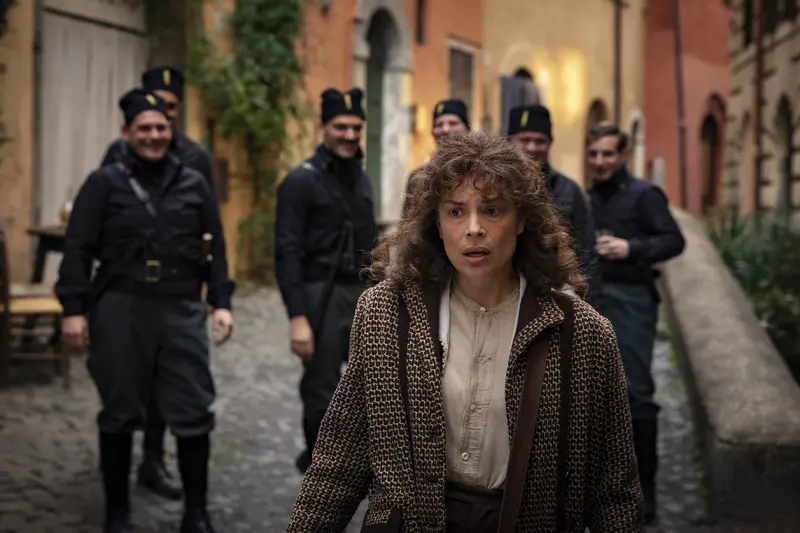
Rebellious and indomitable, Elena often clashed with the Fascist thugs thronging the neighbourhood and is interned in the "manicomio della Provincia", the former Santa Maria della Pietà mental asylum.
For his first feature-length fiction film, Stefano Casertano has chosen the story of Elena Di Porto, known "the madwoman of piazza Giudia", who – informed by reliable sources – tried in vain to warn the community of the impending Nazi roundup on the night of October 16, 1943.
Elena del Ghetto is set in the Roman ghetto between 1938 and 1943, the years of the inexorable rise of fascism and the horror of the racial laws. Standing on the abyss of history, it tells the story of the courage of a woman with a rebellious and indomitable temperament, played by Micaela Ramazzotti.
The five-week shoot (in February - March 2025) took place in Tivoli and the historic centre of Rome with a crew of 80.
Piazza delle Erbe in Tivoli (featured in the Rai series La Storia by Francesca Archibugi) appears repeatedly as the market place where the Germans load the Jews onto trucks for deportation to Auschwitz in the most dramatic scene. Other areas of the historic centre and viale Giuseppe Mazzini also provided locations.
Scenes were also shot on Isola Tiberina in Rome. Ponte Fabricio, the oldest bridge in Rome (62 BC), and the exterior of the Church of San Giovanni Calibita, at the entrance to the bridge, are seen on Elena's route to work.
Rebellious and indomitable, Elena often clashed with the Fascist thugs thronging the neighbourhood and is interned in the "manicomio della Provincia", the former Santa Maria della Pietà mental asylum.

The Ghetto, Rome. The night of October 16, 1943, a woman runs through the rain, screaming out for everyone to flee. Her name is Elena Di Porto. She has separated from her husband, wears trousers, smokes, plays billiards, and boxes and is known in the ghetto as "the madwoman". This is maybe why no one believes her warning of the impending Nazi roundup, which she heard of from reliable sources. The film recounts the courage of the rebellious and indomitable Jewish woman in the face of the inexorable rise of horror over the course of five years (1938-1943) produced by fascism.