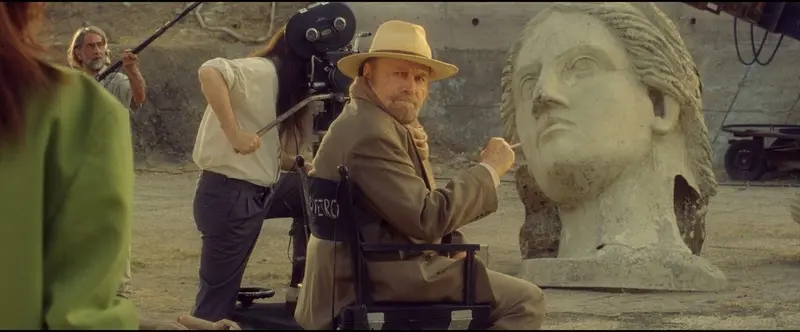
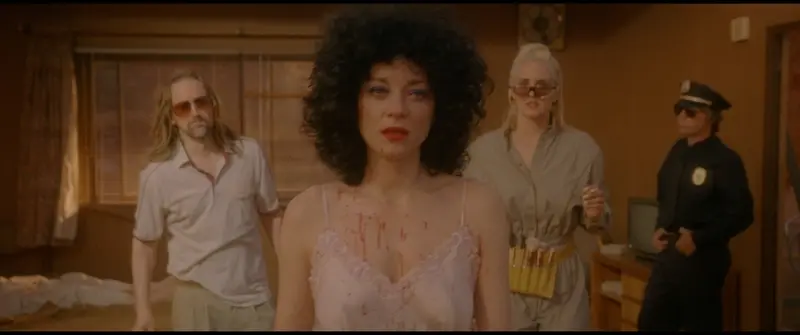
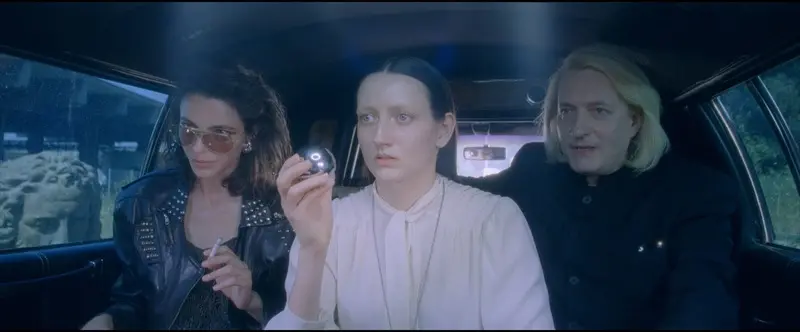
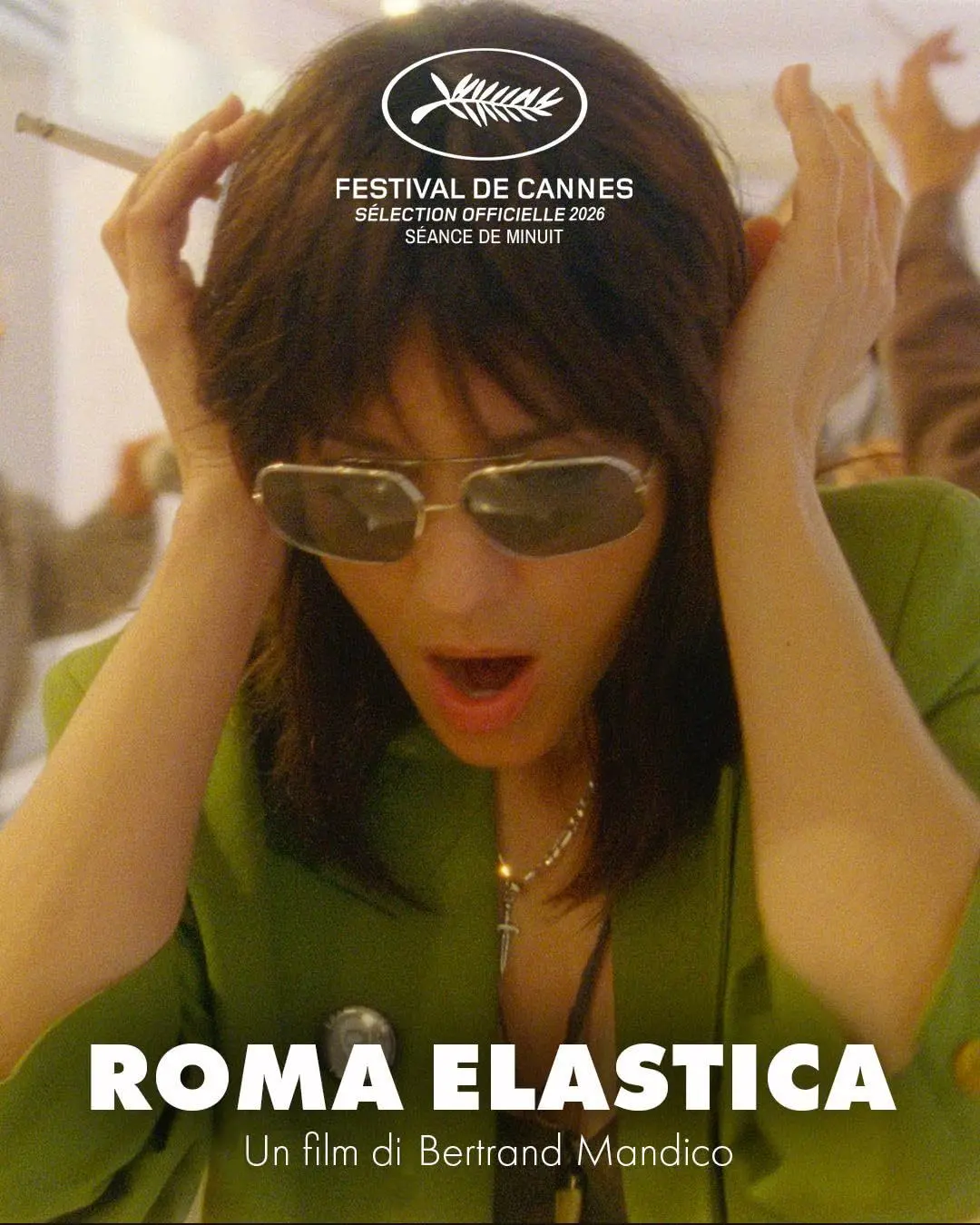
Bertrand Mandico's Roma elastica is the backdrop to the last working engagement of Eddie Mars (Marion Cotillard), an ailing American actress in decline, who has agreed to star in a pulp science fiction film directed by two Italians (Martina Scrinzi and Agnese Claisse).
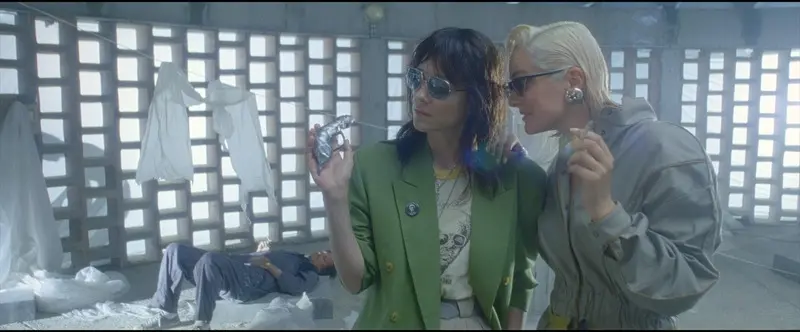
" Rome in the film isn't how you'd expect. The urban environments are actually the monumental remains of the Cinecittà sets, rising majestically amidst the studio soundstages. You could say I went there to film their hidden reflection: the underground areas, forgotten walls. I shot the scene in the Cinecittà basement in Nice, in the former IBM headquarters built by the Brutalist architect Breuer" explains the director.
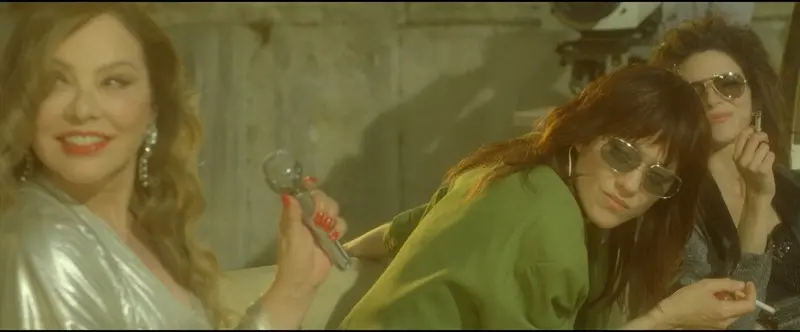
The set created by Bertrand Mandico at Cinecittà Studios features surreal and decadent environments, with acid colours and ruined statues surrounding the characters. On the Via Tuscolana lot, the actual set of the story blends with that of the absurd film Eddie is about to shoot, presenting a cinematic universe attempting to rise from the rubble of a once-glorious past, now reduced to the mere exasperation of an aesthetic that exalts bad taste.
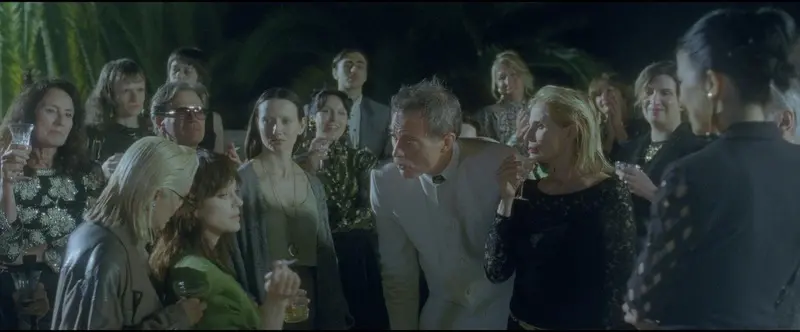
"We filmed amidst the fascist architecture of the EUR district. We presented it as if it were a reconstructed set, fake and disturbing. In a way, my approach to the film was to compose it like a collage, but in the end, the truth of Rome emerges: a place of stratifications and superimpositions".
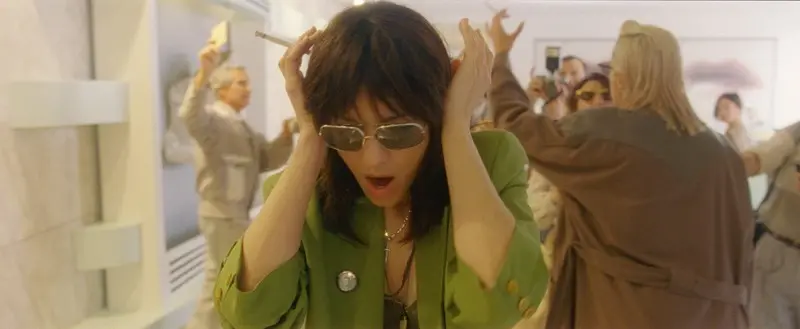
In addition to Rome, the film features scenes shot in France: the scene in the Cinecittà basement was filmed in Nice, in the former IBM headquarters built by the Brutalist architect Breuer, while the television studio with Ornella Muti was shot during the day in the real Temple of Diana in Nîmes.
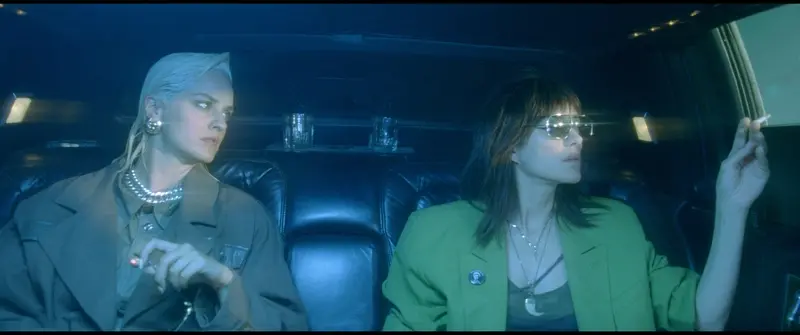
Shot entirely on 35mm and immersed in an Italo-disco atmosphere, the film pays homage to Italian cinema of the 1970s and 1980s, evoking the imagery of Federico Fellini, Michelangelo Antonioni, Elio Petri, and Bernardo Bertolucci.
Bertrand Mandico's Roma elastica is the backdrop to the last working engagement of Eddie Mars (Marion Cotillard), an ailing American actress in decline, who has agreed to star in a pulp science fiction film directed by two Italians (Martina Scrinzi and Agnese Claisse).
" Rome in the film isn't how you'd expect. The urban environments are actually the monumental remains of the Cinecittà sets, rising majestically amidst the studio soundstages. You could say I went there to film their hidden reflection: the underground areas, forgotten walls. I shot the scene in the Cinecittà basement in Nice, in the former IBM headquarters built by the Brutalist architect Breuer" explains the director.
The set created by Bertrand Mandico at Cinecittà Studios features surreal and decadent environments, with acid colours and ruined statues surrounding the characters. On the Via Tuscolana lot, the actual set of the story blends with that of the absurd film Eddie is about to shoot, presenting a cinematic universe attempting to rise from the rubble of a once-glorious past, now reduced to the mere exasperation of an aesthetic that exalts bad taste.
"We filmed amidst the fascist architecture of the EUR district. We presented it as if it were a reconstructed set, fake and disturbing. In a way, my approach to the film was to compose it like a collage, but in the end, the truth of Rome emerges: a place of stratifications and superimpositions".
In addition to Rome, the film features scenes shot in France: the scene in the Cinecittà basement was filmed in Nice, in the former IBM headquarters built by the Brutalist architect Breuer, while the television studio with Ornella Muti was shot during the day in the real Temple of Diana in Nîmes.
Shot entirely on 35mm and immersed in an Italo-disco atmosphere, the film pays homage to Italian cinema of the 1970s and 1980s, evoking the imagery of Federico Fellini, Michelangelo Antonioni, Elio Petri, and Bernardo Bertolucci.
Copyright: © 2026 - ATELIER DE PRODUCTION - REDIBIS FILM - DUGONG FILMS - ARTE France Cinéma - PROVENCE STUDIOS - MY UNITY PRODUCTION - KINOLOGY
Copyright: © 2026 - ATELIER DE PRODUCTION - REDIBIS FILM - DUGONG FILMS - ARTE France Cinéma - PROVENCE STUDIOS - MY UNITY PRODUCTION - KINOLOGY
Copyright: © 2026 - ATELIER DE PRODUCTION - REDIBIS FILM - DUGONG FILMS - ARTE France Cinéma - PROVENCE STUDIOS - MY UNITY PRODUCTION - KINOLOGY
Copyright: © 2026 - ATELIER DE PRODUCTION - REDIBIS FILM - DUGONG FILMS - ARTE France Cinéma - PROVENCE STUDIOS - MY UNITY PRODUCTION - KINOLOGY
Copyright: © 2026 - ATELIER DE PRODUCTION - REDIBIS FILM - DUGONG FILMS - ARTE France Cinéma - PROVENCE STUDIOS - MY UNITY PRODUCTION - KINOLOGY
Copyright: © 2026 - ATELIER DE PRODUCTION - REDIBIS FILM - DUGONG FILMS - ARTE France Cinéma - PROVENCE STUDIOS - MY UNITY PRODUCTION - KINOLOGY
Atelier de Production, Redibis Film, Dugong Films
Set in the 1980s, Roma elastica is the story of an actress who comes to Rome to shoot her last film. Inspired by the imagery of Italian cinema and the sets of ancient Rome at Cinecittà Studios, the film explores nostalgia, homage, and meta-cinematic reflection.