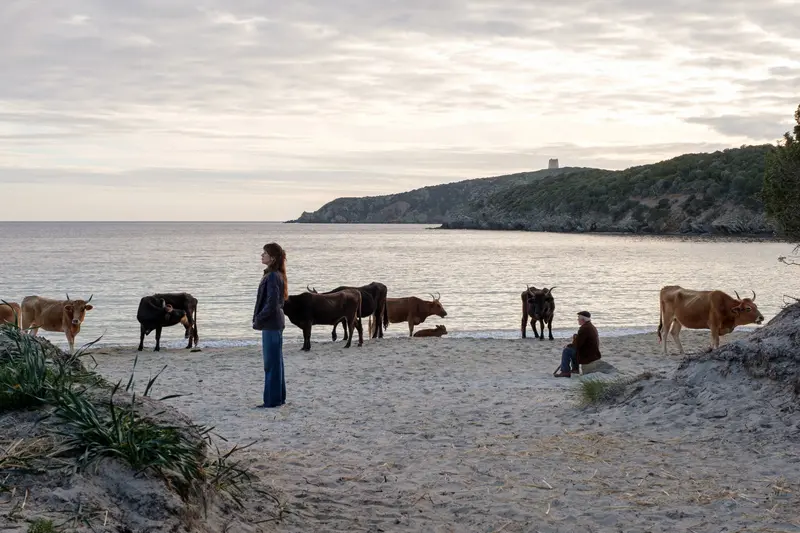
After A World Apart, set in a remote village in the heart of the Abruzzo National Park, director Riccardo Milani returns to the big screen with another story rooted in its local context, this time the Sulcis Iglesiente region of Southern Sardinia. Life Goes This Way, presented at the 20th Rome Film Fest in the Grand Public section, tells the story of an elderly Sardinian shepherd who grazes his cows on the enchanting Tuerredda beach, a pristine corner of the coast where pure white sand frames a crystalline sea. It covers some 500 metres between Capo Malfatano and Capo Spartivento. The beach is part of the Teulada area, whose historic centre is seen repeatedly, particularly piazza Parrocchia, dominated by the Church dedicated to the Virgin of Mount Carmel, where Francesca (Virginia Raffaele) meets Giovanna (Geppi Cucciari) for the first time, unaware that she is a magistrate.
The story is inspired by the true story of Ovidio Marras, who recently died at the age of 93. He fought to defend his land in Capo Malfatano from real estate developers who had set their sights on creating a luxury resort. It is a humorous, passionate tale spanning twenty years, set in a beautiful corner of Sardinia, where a community finds itself caught between the dream of jobs and the defence of the land and its identity.
Filming also took place in Cagliari where locations included: via Ancona, inside a law firm, the historic Castello district, and piazza Repubblica, home to the Courthouse and the Palazzo Viceregio.
The exteriors of the headquarters of the real estate developers who want the elderly shepherd's land in Sardinia, headed by Giacomo (Diego Abatantuono) were filmed in Milan, facing the Cathedral. An evocative shot of lake Maggiore shows the illuminated exterior of the Grand Hôtel des Îles Borromées in Stresa (province of Verbano-Cusio-Ossola) where the writer Hemingway was once a guest, and which is the setting for a Millennium New Year's Eve.
After A World Apart, set in a remote village in the heart of the Abruzzo National Park, director Riccardo Milani returns to the big screen with another story rooted in its local context, this time the Sulcis Iglesiente region of Southern Sardinia. Life Goes This Way, presented at the 20th Rome Film Fest in the Grand Public section, tells the story of an elderly Sardinian shepherd who grazes his cows on the enchanting Tuerredda beach, a pristine corner of the coast where pure white sand frames a crystalline sea. It covers some 500 metres between Capo Malfatano and Capo Spartivento. The beach is part of the Teulada area, whose historic centre is seen repeatedly, particularly piazza Parrocchia, dominated by the Church dedicated to the Virgin of Mount Carmel, where Francesca (Virginia Raffaele) meets Giovanna (Geppi Cucciari) for the first time, unaware that she is a magistrate.
The story is inspired by the true story of Ovidio Marras, who recently died at the age of 93. He fought to defend his land in Capo Malfatano from real estate developers who had set their sights on creating a luxury resort. It is a humorous, passionate tale spanning twenty years, set in a beautiful corner of Sardinia, where a community finds itself caught between the dream of jobs and the defence of the land and its identity.
Filming also took place in Cagliari where locations included: via Ancona, inside a law firm, the historic Castello district, and piazza Repubblica, home to the Courthouse and the Palazzo Viceregio.
The exteriors of the headquarters of the real estate developers who want the elderly shepherd's land in Sardinia, headed by Giacomo (Diego Abatantuono) were filmed in Milan, facing the Cathedral. An evocative shot of lake Maggiore shows the illuminated exterior of the Grand Hôtel des Îles Borromées in Stresa (province of Verbano-Cusio-Ossola) where the writer Hemingway was once a guest, and which is the setting for a Millennium New Year's Eve.
Copyright: ph: Claudio Iannone
Virginia Raffaele, Ignazio Giuseppe Loi - Beach of Tuerredda - Life is life
Copyright: ph: Claudio Iannone
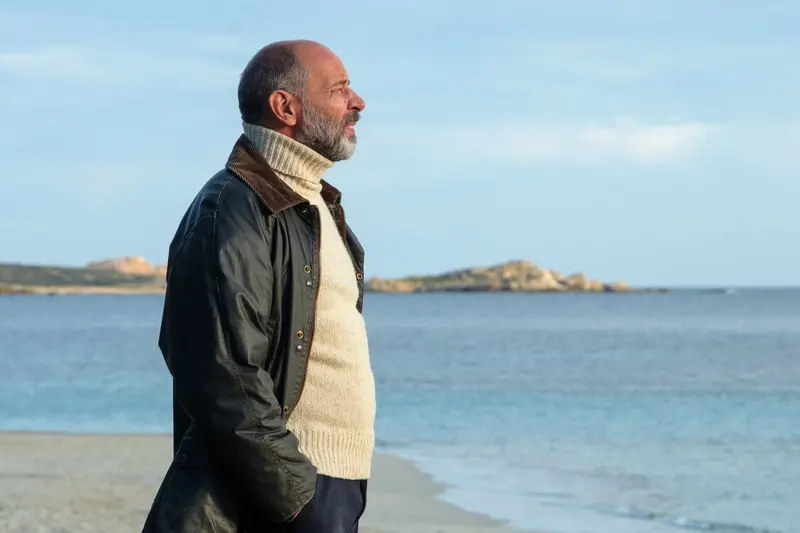
Aldo Baglio - Life is life
Copyright: ph: Claudio Iannone
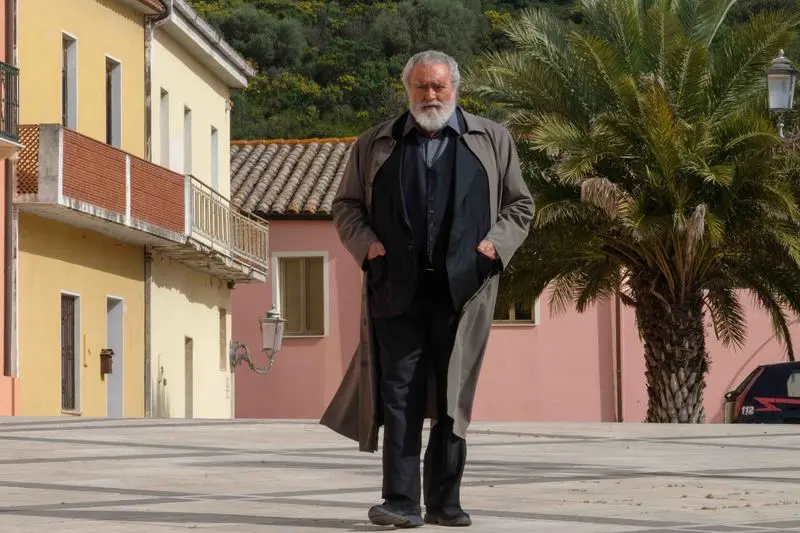
Diego Abatantuono - Life is life
Copyright: ph: Claudio Iannone
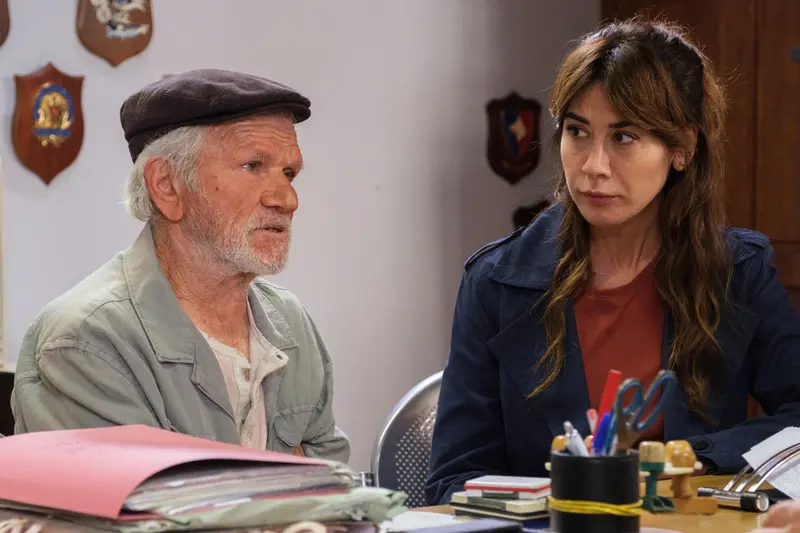
Ignazio Giuseppe Loi, Virginia Raffaele - Life is life
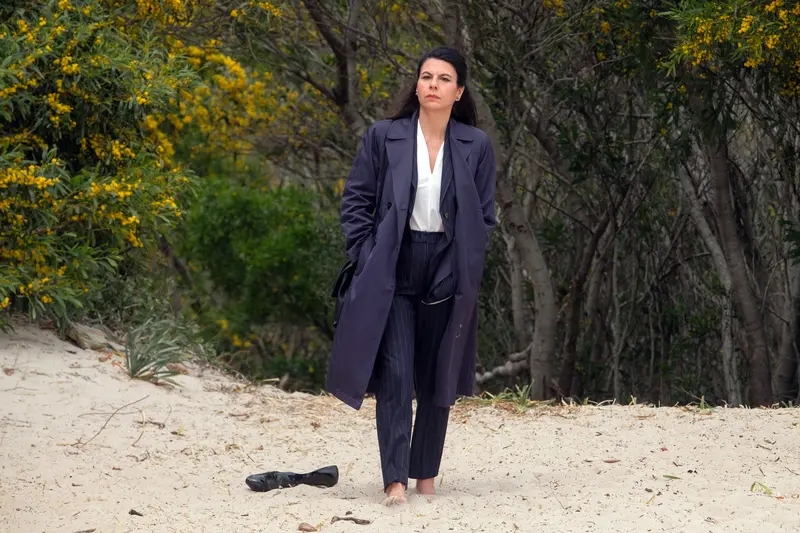
Copyright: ph: Claudio Iannone
Geppi Cucciari - Life is life
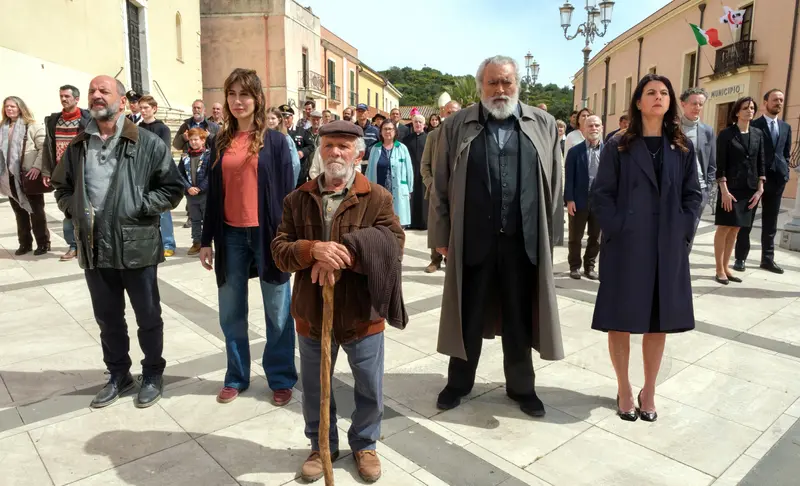
Copyright: ph: Claudio Iannone
Ignazio Giuseppe Loi, Aldo Baglio, Virginia Raffaele, Diego Abatantuono, Geppi Cucciari - Life is life
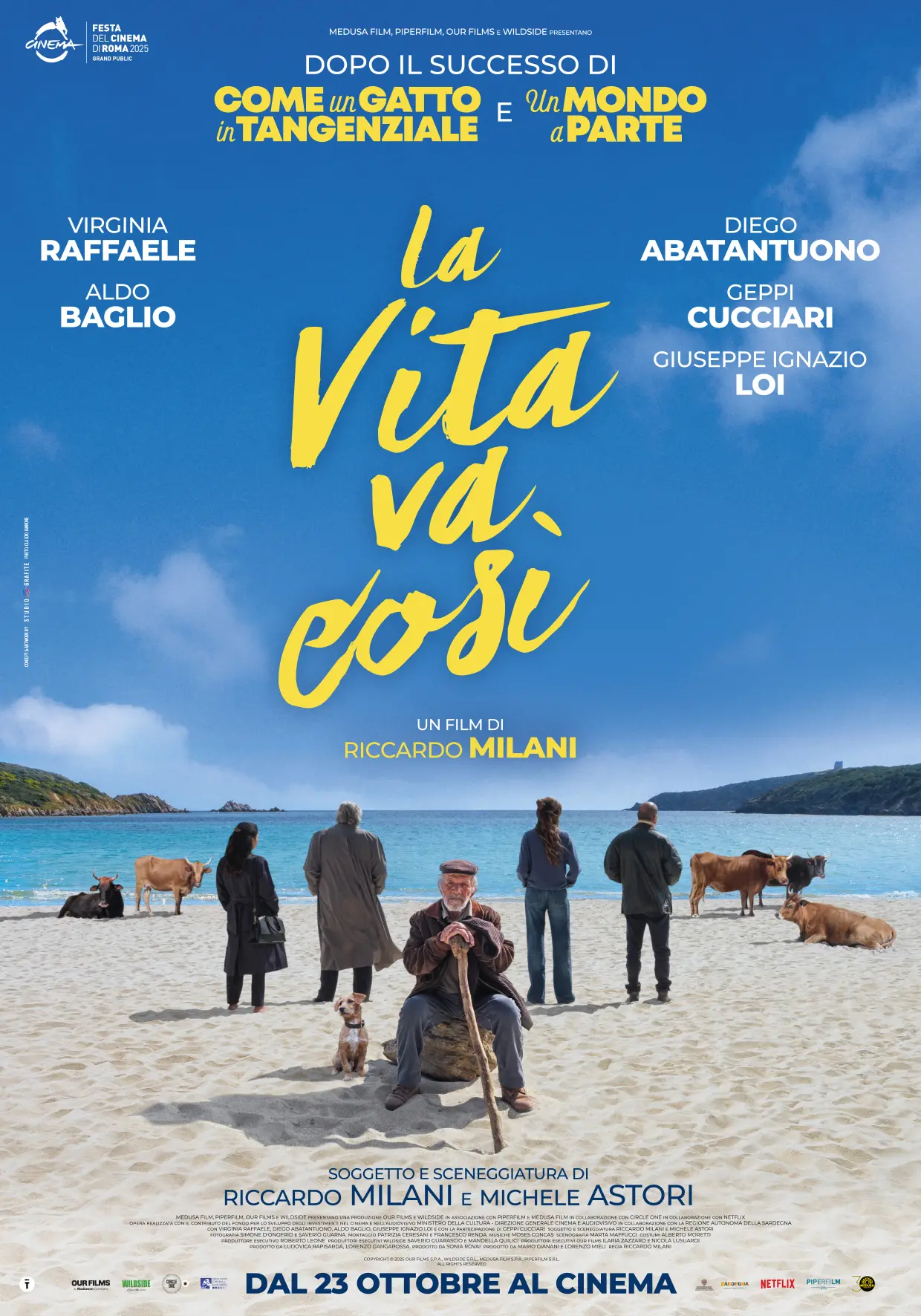
Our Films, Wildside, PiperFilm, Medusa Film
On a pristine coast in southern Sardinia, at the start of the new millennium, Efisio Mulas, a solitary shepherd and guardian of a time that seems long gone, stubbornly defends his land from Giacomo, a powerful entrepreneur intent on transforming it into a luxury resort. Mariano, a pragmatic construction site manager, tries to convince him to sell, while Francesca, his daughter, is torn between attachment to her roots and the community's urgent need for change.
When the dispute reaches court, it is resolved by Giovanna, a local judge. While the community looks to the future with hope, Efisio's refusal remains the only voice defending their identity and their land: sometimes, precisely because "life goes that way", you have to stop and choose your own path.