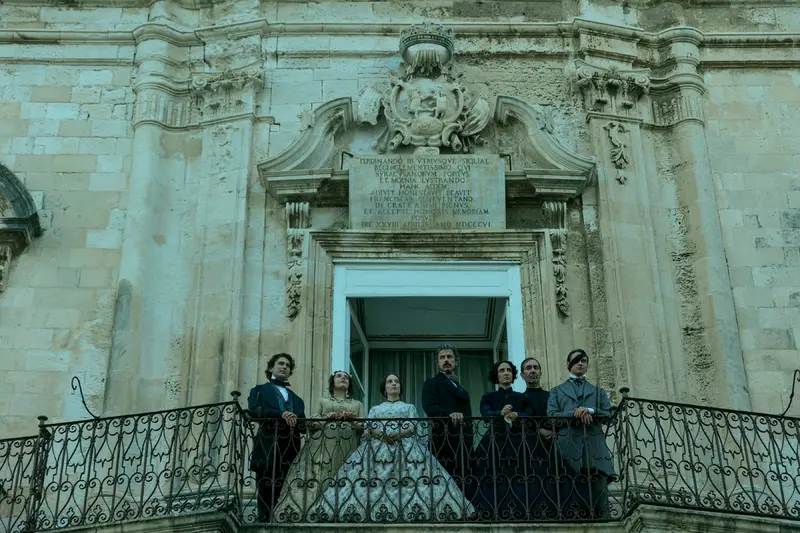
The Leopard is a six-episode Netflix series based on Giuseppe Tomasi di Lampedusa’s novel of the same name, produced by Indiana Production and Moonage Pictures.
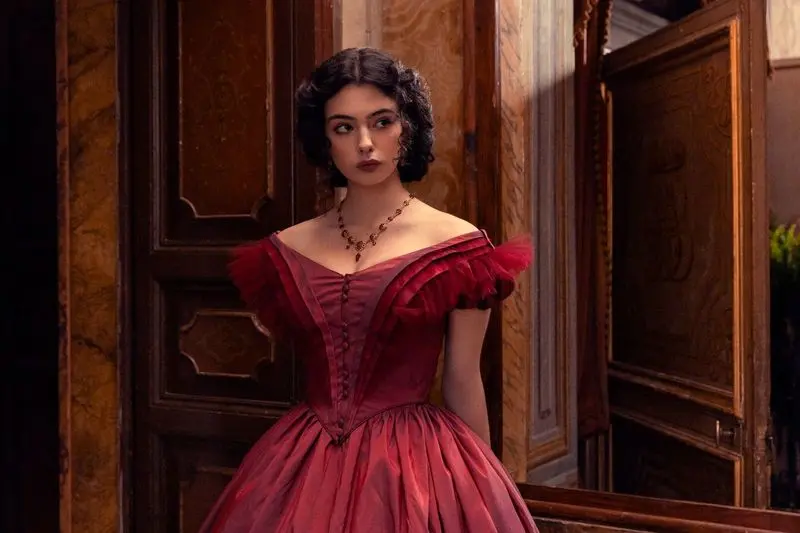
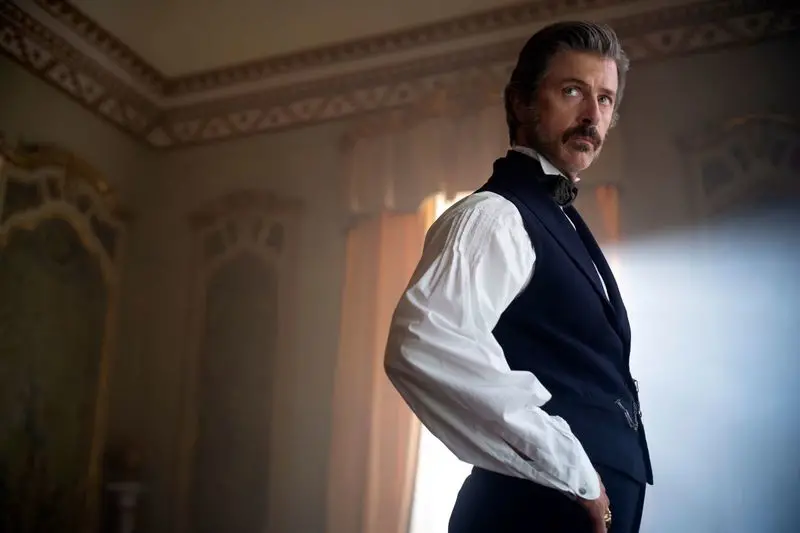
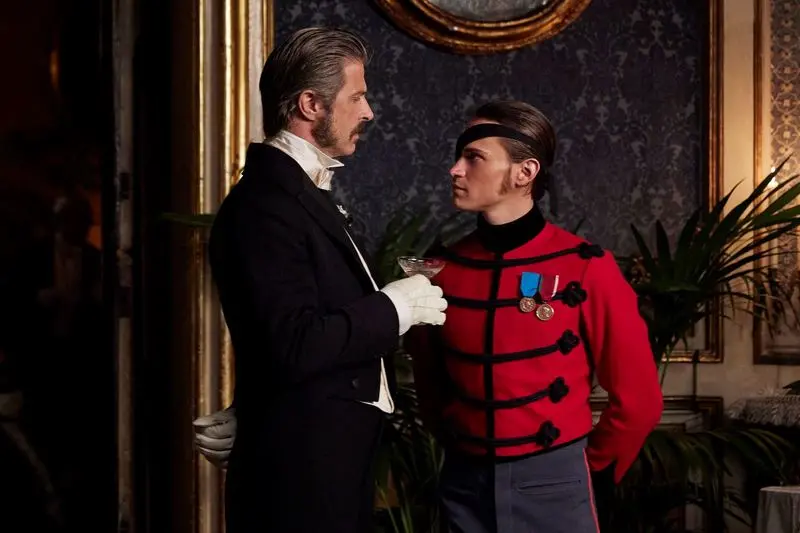
The cast includes Kim Rossi Stuart as Don Fabrizio Corbera, Prince of Salina; Benedetta Porcaroli as Concetta; Deva Cassel and Saul Nanni as Angelica and Tancredi; Paolo Calabresi, Francesco Colella, Astrid Meloni, and Greta Esposito.
Tom Shankland directs, with Giuseppe Capotondi (episode 4) and Laura Luchetti (episode 5). Written by Richard Warlow, who also serves as creator and executive producer with Benji Walters, the series rediscovers a modernity in the story of the Prince of Salina and his family that epitomizes Italy, both past and present.
The director of photography is Nicolaj Bruel, the costumes are by Carlo Poggioli and Edoardo Russo, and the production design is by Dimitri Capuani. The original music is by Paolo Buonvino.
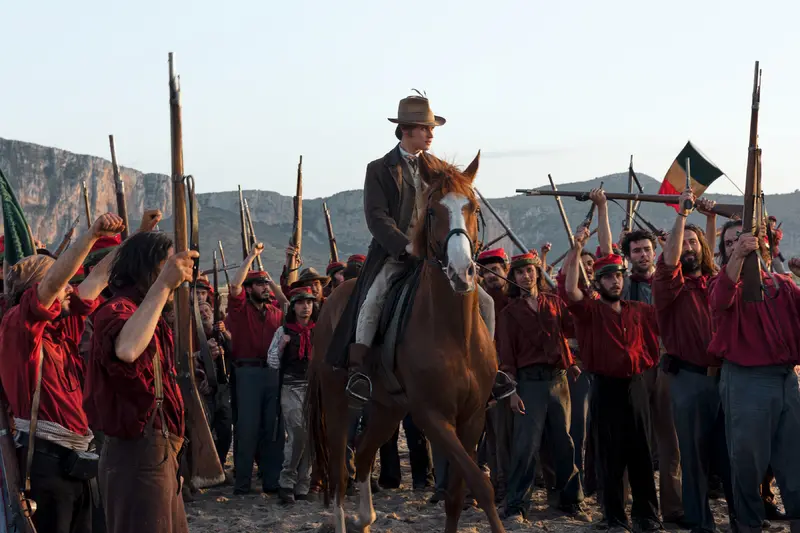
Based on one of the greatest Italian novels of all time, Giuseppe Tomasi di Lampedusa's masterpiece The Leopard, the series offers an epic, surprising, and sensual tale set in Sicily during the 1860 uprisings. The adaptation has an illustrious precedent: Luchino Visconti's 1963 film of the same name which stars Burt Lancaster, Alain Delon, and Claudia Cardinale. The series uses a contemporary lens to explore universal themes that have been relevant across centuries: power, love, the cost of progress.
Filming began in Rome in April 2023 and continued for over four months in Rome, Sicily (Palermo, Syracuse, Catania), and Turin.
The series opens with a tracking shot that descends from above the octagonal lantern of the bell tower (c. 1690) of the Church of San Giuseppe dei Teatini with its twisted columns, and polychrome majolica dome (1724) to the scenic Pretoria fountain in the square of that name, with the Church of Santa Caterina d'Alessandria in the background.
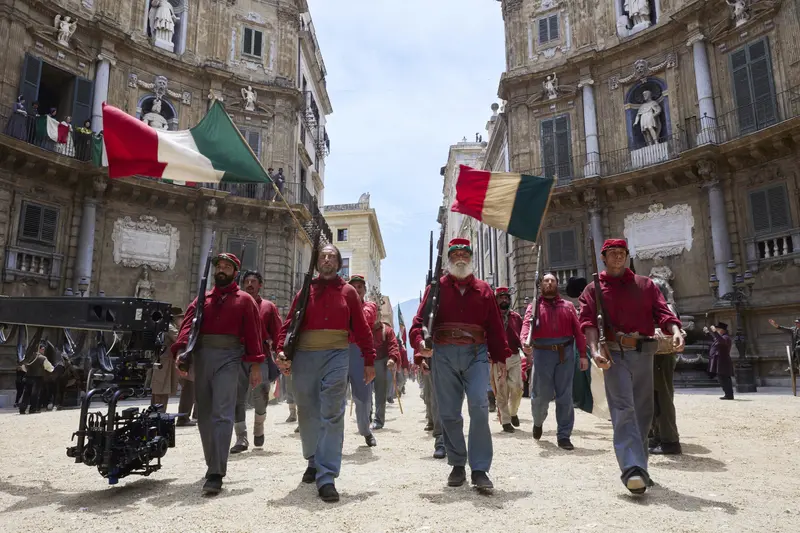
A stone's throw from the fountain via Vittorio Emanuele meets Via Maqueda at the city's most famous intersection. The Quattro Canti of piazza Villena, also known as the Octagon of the Sun or the Theatre of the Sun, is a masterpiece of Sicilian Baroque urban planning, designed by the Florentine Giulio Lasso and completed by the Palermitan Mariano Smeriglio.
From here, via Maqueda leads past the Pretoria fountain and the Tevatini Church to piazza Bellini and another key location in the series, one of the city's great medieval landmarks: the Church of San Cataldo, also known locally as the Martorana, which dates to the mid-12th century - a rare example of Arab-Norman architecture – and whose three ranked red domes make it immediately recognizable.
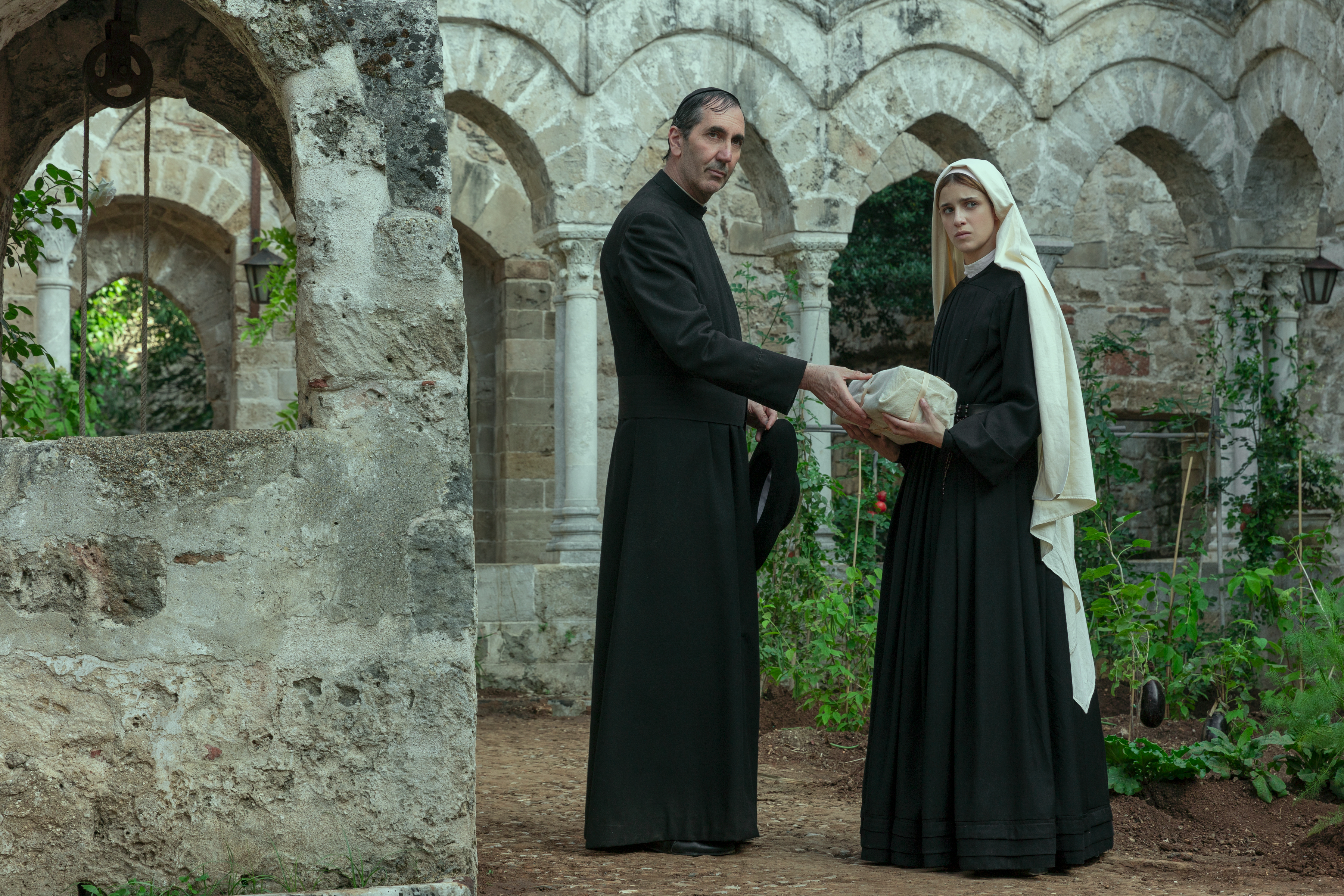
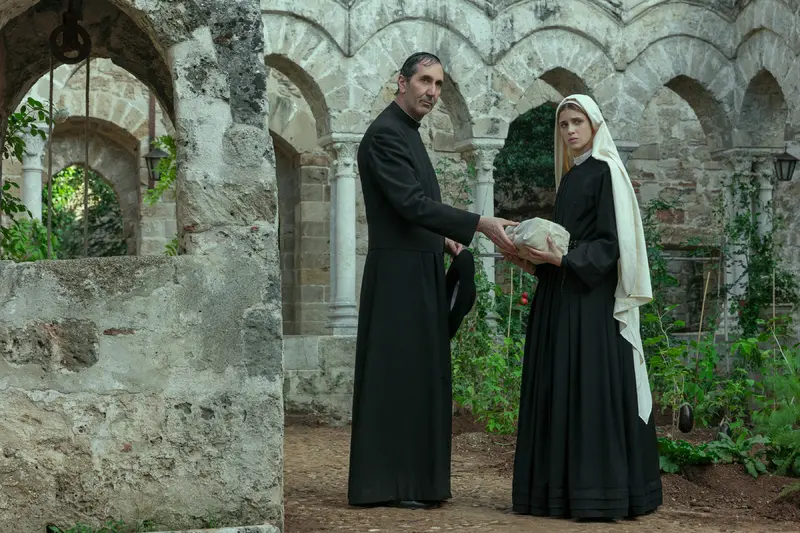
In Episode 1, this building, plus the Teatini Church opposite, provides the exteriors of the fictional Convent of the Sacred Redeemer, where Concetta (Benedetta Porcari) is living at the beginning of the story and where she later returns heartbroken by the union between Tancredi (Saul Nanni) and Angelica (Deva Cassel). However, the interiors of the church are actually those of the Church of Santa Maria dell'Orto in Trastevere (Rome), which has a large M for Mary on the back window. In Episodes 3 and 4, Concetta and other characters are seen in a cloister with pointed arches supported by twin columns with the red domes in the background. Although the domes those of the Church of San Cataldo seen alongside the Martorana, the cloister itself is the 12th-13th-century cloister of San Giovanni degli Eremiti, with its lush vegetation and distinctive Norman well, built on the site of an earlier Arab cistern.

The novel mentions another Benedictine monastery, founded by Blessed Corbera, ancestor of the princes of Salina, which appears in Episode 3. The location used was the Abbey of San Sebastian in Alatri (Frosinone), historically connected to Saint Benedict of Norcia who stopped here while travelling from Subiaco to Montecassino. The exteriors are featured when the carriage with the Salina princes and father Pirrone (Paolo Calabresi) draws up, as is the beautiful Romanesque cloister with fountain where Don Fabrizio converses with the Mother Superior.
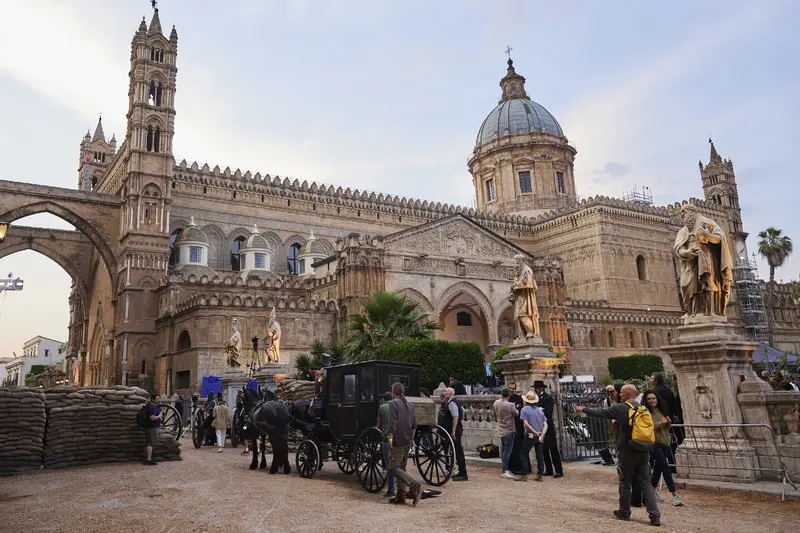
Palermo’s imposing Cathedral of the Assumption is an essential part of the city, it is seen in the series from via Vittorio Emanuele and on Via Matteo Bonello, dominated by two 12th-century Norman (yet already Gothic) arched bridges that connect the church's façade to the neo-Gothic bell tower (reconstructed by Emmanuele Palazzotto in 1835-40 after damage from the 1823 earthquake), built on one of the towers of the ancient Punic-Roman walls.
Palazzo Comitini in Palermo hosted numerous scenes of family breakfasts and lunches at Villa Salina. A large room with stucco, frescoes, and a Sicilian majolica floor and an imposing dining table in the centre is a recurring location; small seating areas and groups of plants were placed at the far end. Villa Wirz, the 16th-century residence where Tancredi lives, is also in Palermo.
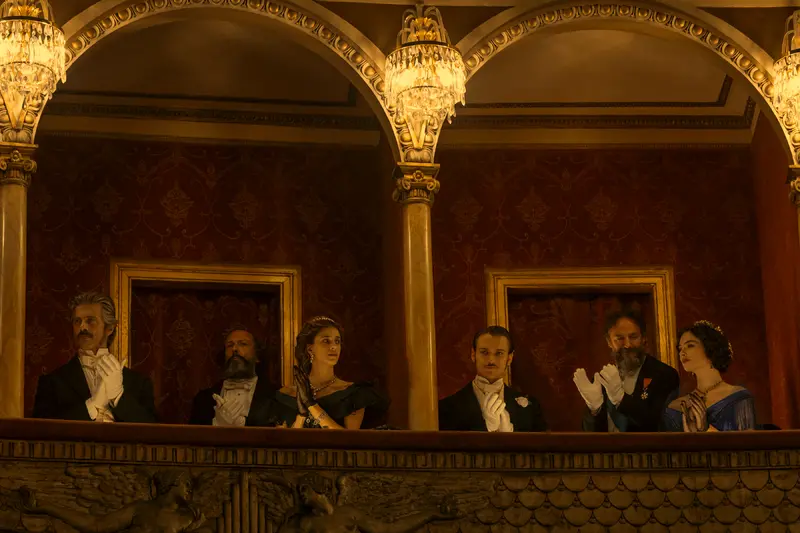
Palermo is also "depicted" by other cities, as with the Roman church of Santa Maria dell'Orto. The Liberation Ball, where Palermo nobles and Garibaldi's conquerors mingle, was actually shot in the great Orchestra Hall of Palazzo Biscari in Catania.
Angelica and Tancredi’s wedding, which takes place in Palermo in Episode 4, was filmed in Rome, in the Church of the Santi Nomi di Gesù e Maria.
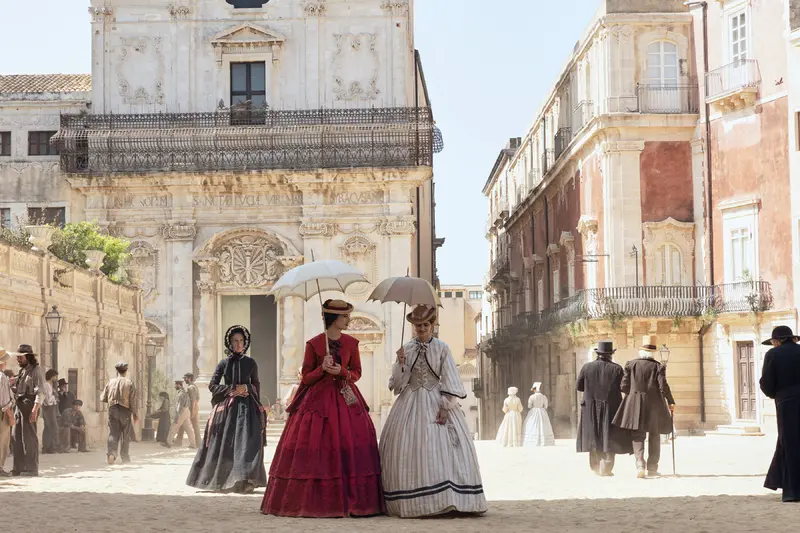
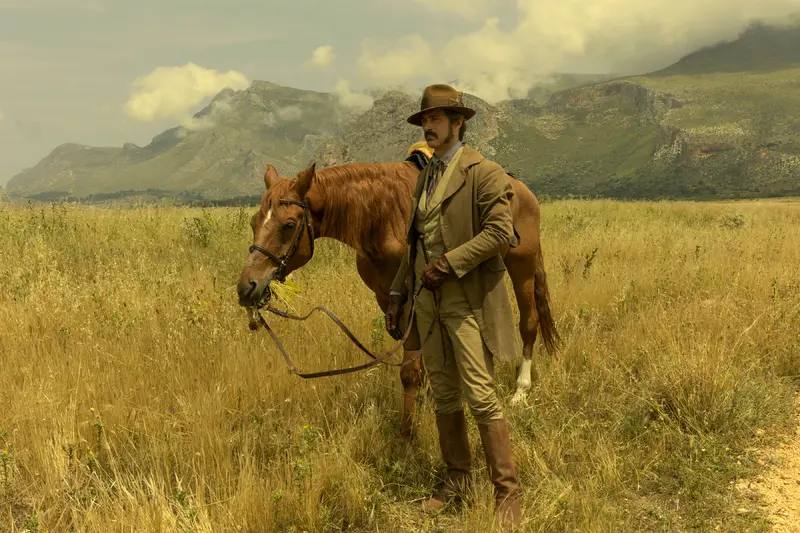
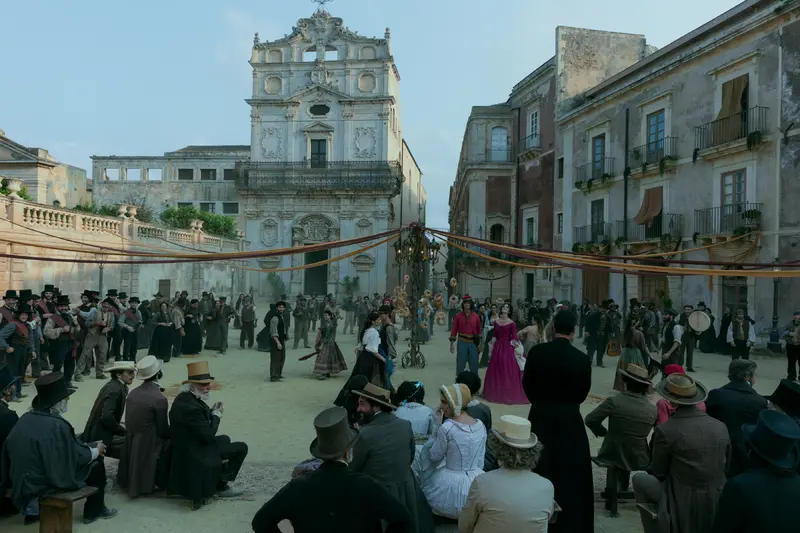
The Salina family travel by carriage to the fictional mountain village of Donnafugata to escape the heat of Palermo: during the journey the prince compares the surrounding nature to his state of mind, "deserted mountains like despair" and "funereal countryside". This was filmed in the near-deserted landscape of the Cannizzola badlands, while Donnafugata was created in piazza Duomo, in Ortigia, the island that forms the oldest part of Syracuse which was completely transformed for the production into a small 19th-century rural village, with packed earth covering the streets and other scenic interventions.
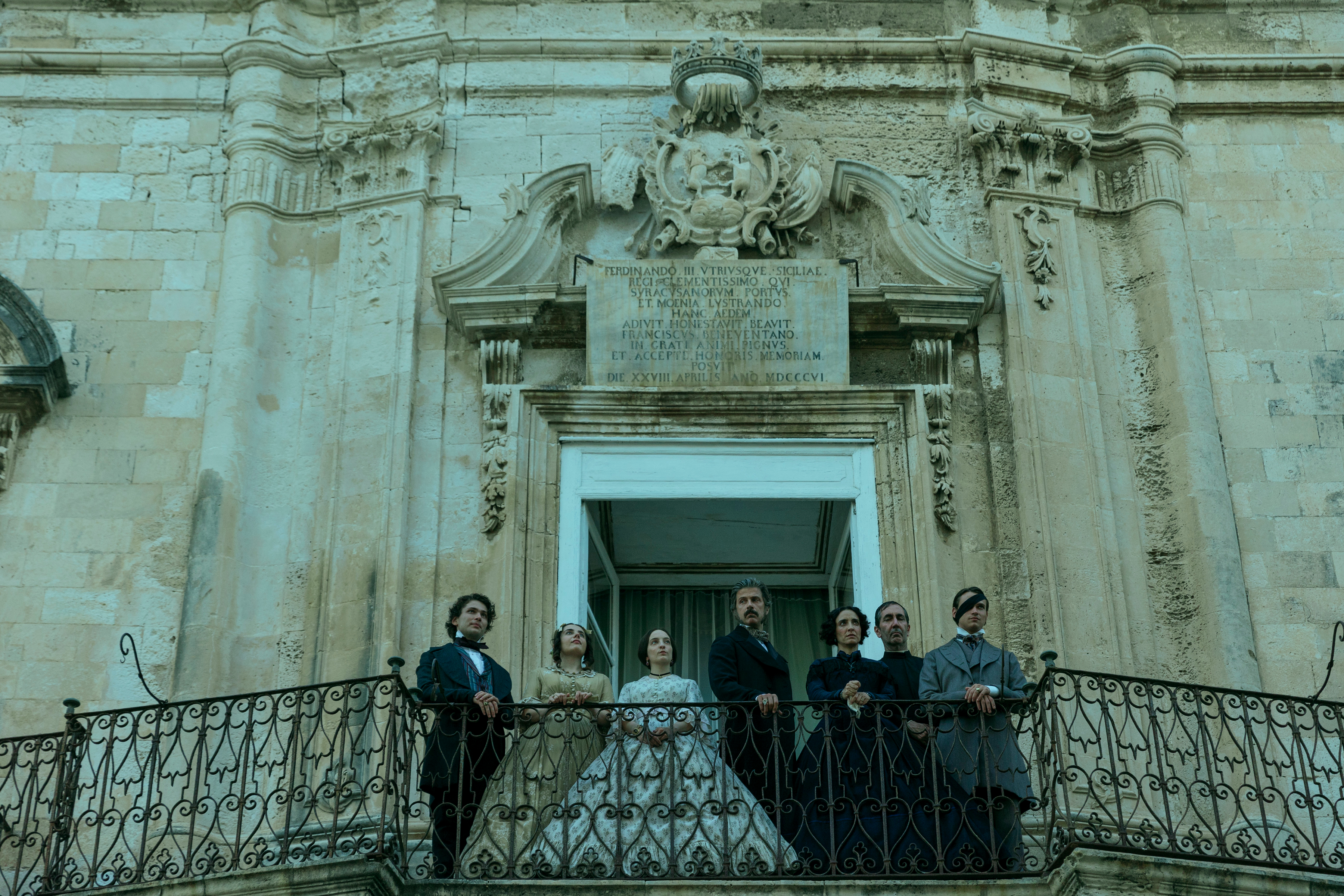
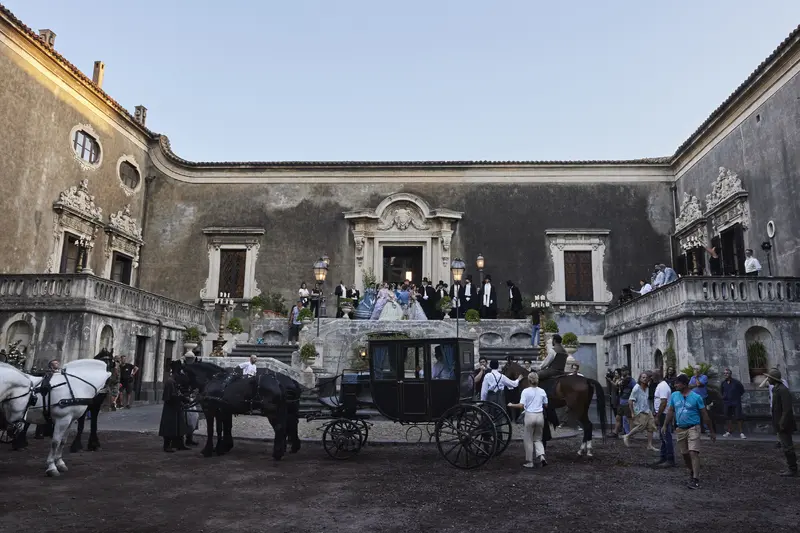
The 18th-century Villa Valguarnera in Bagheria was chosen to represent Villa Salina, a focal point of the story as the family residence of Prince Fabrizio Corbera (Kim Rossi Stuart). It has also featured in Valeria Golino's The Art of Joy (2024), Niccolò Ammaniti's Anna (2021), and Ferzan Özpetek's The Goddess of Fortune (2019). The dramatic structure, with lateral wings that act as exedras to the recessed central body, contrasts with the interiors, provided by Palazzo Comitini, now the headquarters of the City of Palermo (the sumptuous sala Martorana was repeatedly used as a location).
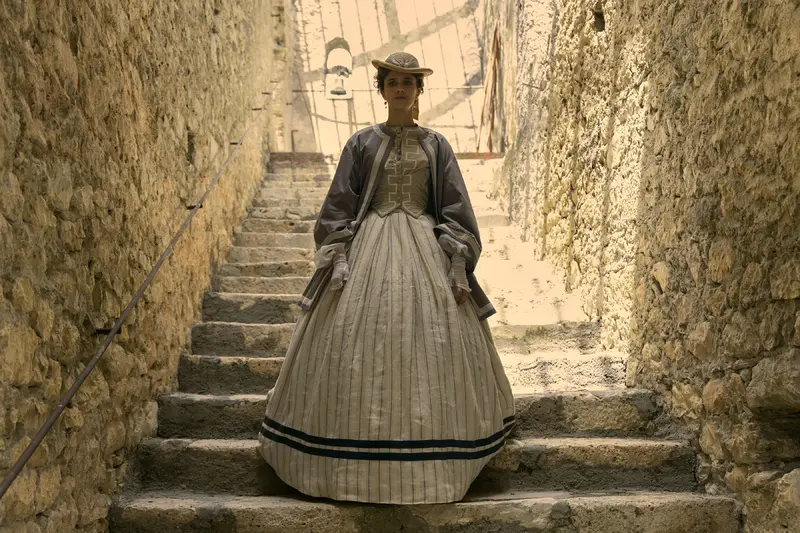
The interiors, filmed also in Rome (Cinecittà studios), feature worn and dusty fabrics in the villas and palaces, symbolizing the decadence of the nobility. Multiple locations were often combined to create a single setting. Almost all the locations in the series were furnished from scratch and brought to life through objects that convey the characters' stories (including plants and flowers, as the prince of Salina is a botany enthusiast). Villa Parisi in Frascati hosted the dinner with the Sedara family in the Palazzo di Donnafugata. The historic centre of nearby Tivoli also provided a location.
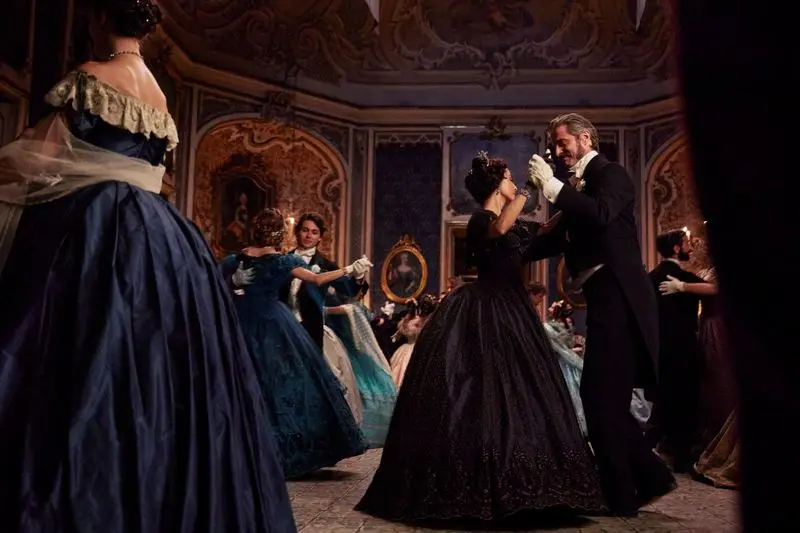
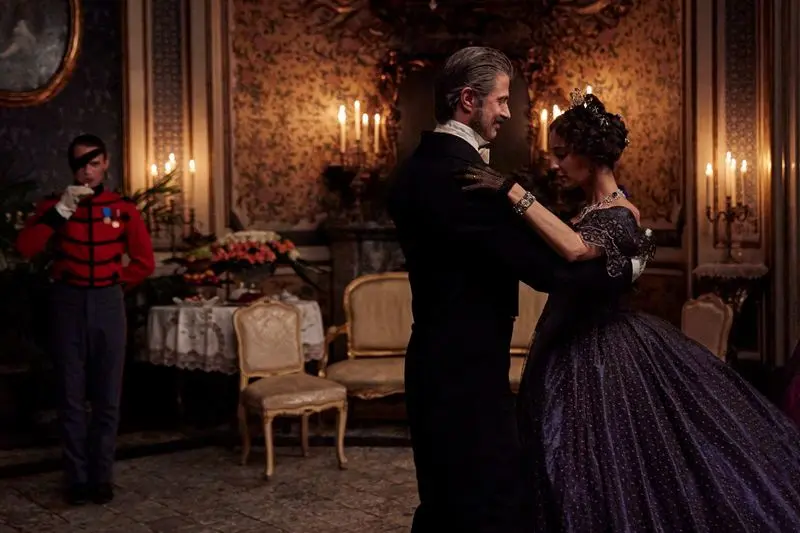
The ballroom of the Grand Hotel Plaza in Rome was the location for the grand ball, which in the novel takes place at Palazzo Ponteleone, where Don Fabrizio and Angelica dance watched by the assembled company.
The story makes a decisive shift to Turin, now the capital of the Kingdom of Italy, in episode 5; this is where Angelica and Tancredi move to pursue their plans for unbridled social advancement. The train puffs north, symbolizing the now unified country, and the camera echoes the tracking shot in episode 1 with the dome of San Giuseppe dei Teatini in Palermo, by moving from behind Filippo Juvarra's Basilica of Superga (1717-31), which looks out over the valley and the city divided by the Po river, to descend into piazza Carignano with its eponymous Palazzo. Palazzo Carignano, built for Emanuele Filiberto of Savoy-Carignano, is one of Guarino Guarini’s Baroque masterpieces; Guarini, a Theatine priest, also designed the Chapel of the Holy Shroud (1680), with its famous dome, which is featured later in the same "Turin" episode.
The series also features the deputies chamber of the Subalpine Parliament, today part of the National Museum of the Italian Risorgimento, when Don Fabrizio is invited to become a member of the Senate (at the time, the upper house of Parliament was by royal appointment). Behind the building, piazza Carlo Alberto features the equestrian monument to Carlo Alberto, King of Sardinia from 1831 to 1847, by Carlo Marrocchetti.
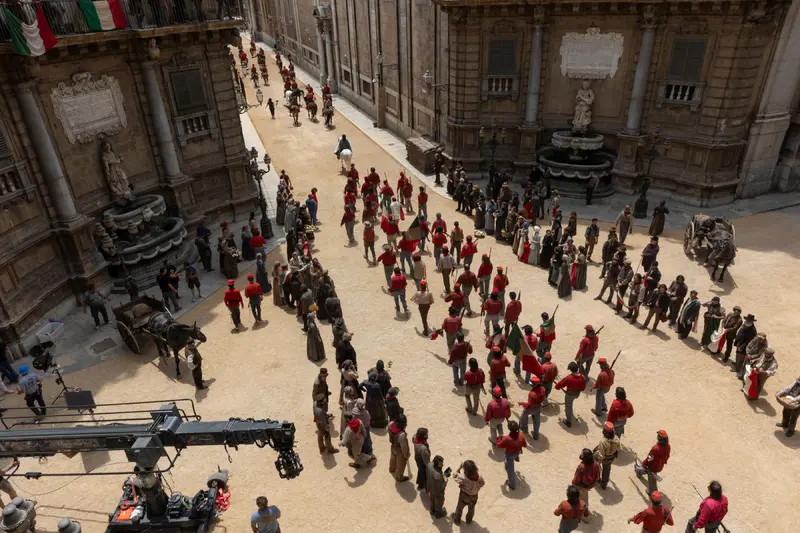
Exterior scenes, featuring extras in period costumes and 19th-century horse-drawn carriages, were also shot at: piazza Palazzo di Città and the Park Caduti dei Lager Nazisti; while Palazzo Carignano, Palazzo Birago di Borgaro, and Palazzo Cisterna provided other "Turin" interiors.
The Leopard is a six-episode Netflix series based on Giuseppe Tomasi di Lampedusa’s novel of the same name, produced by Indiana Production and Moonage Pictures.
The cast includes Kim Rossi Stuart as Don Fabrizio Corbera, Prince of Salina; Benedetta Porcaroli as Concetta; Deva Cassel and Saul Nanni as Angelica and Tancredi; Paolo Calabresi, Francesco Colella, Astrid Meloni, and Greta Esposito.
Tom Shankland directs, with Giuseppe Capotondi (episode 4) and Laura Luchetti (episode 5). Written by Richard Warlow, who also serves as creator and executive producer with Benji Walters, the series rediscovers a modernity in the story of the Prince of Salina and his family that epitomizes Italy, both past and present.
The director of photography is Nicolaj Bruel, the costumes are by Carlo Poggioli and Edoardo Russo, and the production design is by Dimitri Capuani. The original music is by Paolo Buonvino.
Based on one of the greatest Italian novels of all time, Giuseppe Tomasi di Lampedusa's masterpiece The Leopard, the series offers an epic, surprising, and sensual tale set in Sicily during the 1860 uprisings. The adaptation has an illustrious precedent: Luchino Visconti's 1963 film of the same name which stars Burt Lancaster, Alain Delon, and Claudia Cardinale. The series uses a contemporary lens to explore universal themes that have been relevant across centuries: power, love, the cost of progress.
Filming began in Rome in April 2023 and continued for over four months in Rome, Sicily (Palermo, Syracuse, Catania), and Turin.
The series opens with a tracking shot that descends from above the octagonal lantern of the bell tower (c. 1690) of the Church of San Giuseppe dei Teatini with its twisted columns, and polychrome majolica dome (1724) to the scenic Pretoria fountain in the square of that name, with the Church of Santa Caterina d'Alessandria in the background.
A stone's throw from the fountain via Vittorio Emanuele meets Via Maqueda at the city's most famous intersection. The Quattro Canti of piazza Villena, also known as the Octagon of the Sun or the Theatre of the Sun, is a masterpiece of Sicilian Baroque urban planning, designed by the Florentine Giulio Lasso and completed by the Palermitan Mariano Smeriglio.
From here, via Maqueda leads past the Pretoria fountain and the Tevatini Church to piazza Bellini and another key location in the series, one of the city's great medieval landmarks: the Church of San Cataldo, also known locally as the Martorana, which dates to the mid-12th century - a rare example of Arab-Norman architecture – and whose three ranked red domes make it immediately recognizable.
In Episode 1, this building, plus the Teatini Church opposite, provides the exteriors of the fictional Convent of the Sacred Redeemer, where Concetta (Benedetta Porcari) is living at the beginning of the story and where she later returns heartbroken by the union between Tancredi (Saul Nanni) and Angelica (Deva Cassel). However, the interiors of the church are actually those of the Church of Santa Maria dell'Orto in Trastevere (Rome), which has a large M for Mary on the back window. In Episodes 3 and 4, Concetta and other characters are seen in a cloister with pointed arches supported by twin columns with the red domes in the background. Although the domes those of the Church of San Cataldo seen alongside the Martorana, the cloister itself is the 12th-13th-century cloister of San Giovanni degli Eremiti, with its lush vegetation and distinctive Norman well, built on the site of an earlier Arab cistern.
The novel mentions another Benedictine monastery, founded by Blessed Corbera, ancestor of the princes of Salina, which appears in Episode 3. The location used was the Abbey of San Sebastian in Alatri (Frosinone), historically connected to Saint Benedict of Norcia who stopped here while travelling from Subiaco to Montecassino. The exteriors are featured when the carriage with the Salina princes and father Pirrone (Paolo Calabresi) draws up, as is the beautiful Romanesque cloister with fountain where Don Fabrizio converses with the Mother Superior.
Palermo’s imposing Cathedral of the Assumption is an essential part of the city, it is seen in the series from via Vittorio Emanuele and on Via Matteo Bonello, dominated by two 12th-century Norman (yet already Gothic) arched bridges that connect the church's façade to the neo-Gothic bell tower (reconstructed by Emmanuele Palazzotto in 1835-40 after damage from the 1823 earthquake), built on one of the towers of the ancient Punic-Roman walls.
Palazzo Comitini in Palermo hosted numerous scenes of family breakfasts and lunches at Villa Salina. A large room with stucco, frescoes, and a Sicilian majolica floor and an imposing dining table in the centre is a recurring location; small seating areas and groups of plants were placed at the far end. Villa Wirz, the 16th-century residence where Tancredi lives, is also in Palermo.
Palermo is also "depicted" by other cities, as with the Roman church of Santa Maria dell'Orto. The Liberation Ball, where Palermo nobles and Garibaldi's conquerors mingle, was actually shot in the great Orchestra Hall of Palazzo Biscari in Catania.
Angelica and Tancredi’s wedding, which takes place in Palermo in Episode 4, was filmed in Rome, in the Church of the Santi Nomi di Gesù e Maria.
The Salina family travel by carriage to the fictional mountain village of Donnafugata to escape the heat of Palermo: during the journey the prince compares the surrounding nature to his state of mind, "deserted mountains like despair" and "funereal countryside". This was filmed in the near-deserted landscape of the Cannizzola badlands, while Donnafugata was created in piazza Duomo, in Ortigia, the island that forms the oldest part of Syracuse which was completely transformed for the production into a small 19th-century rural village, with packed earth covering the streets and other scenic interventions.
The 18th-century Villa Valguarnera in Bagheria was chosen to represent Villa Salina, a focal point of the story as the family residence of Prince Fabrizio Corbera (Kim Rossi Stuart). It has also featured in Valeria Golino's The Art of Joy (2024), Niccolò Ammaniti's Anna (2021), and Ferzan Özpetek's The Goddess of Fortune (2019). The dramatic structure, with lateral wings that act as exedras to the recessed central body, contrasts with the interiors, provided by Palazzo Comitini, now the headquarters of the City of Palermo (the sumptuous sala Martorana was repeatedly used as a location).
The interiors, filmed also in Rome (Cinecittà studios), feature worn and dusty fabrics in the villas and palaces, symbolizing the decadence of the nobility. Multiple locations were often combined to create a single setting. Almost all the locations in the series were furnished from scratch and brought to life through objects that convey the characters' stories (including plants and flowers, as the prince of Salina is a botany enthusiast). Villa Parisi in Frascati hosted the dinner with the Sedara family in the Palazzo di Donnafugata. The historic centre of nearby Tivoli also provided a location.
The ballroom of the Grand Hotel Plaza in Rome was the location for the grand ball, which in the novel takes place at Palazzo Ponteleone, where Don Fabrizio and Angelica dance watched by the assembled company.
The story makes a decisive shift to Turin, now the capital of the Kingdom of Italy, in episode 5; this is where Angelica and Tancredi move to pursue their plans for unbridled social advancement. The train puffs north, symbolizing the now unified country, and the camera echoes the tracking shot in episode 1 with the dome of San Giuseppe dei Teatini in Palermo, by moving from behind Filippo Juvarra's Basilica of Superga (1717-31), which looks out over the valley and the city divided by the Po river, to descend into piazza Carignano with its eponymous Palazzo. Palazzo Carignano, built for Emanuele Filiberto of Savoy-Carignano, is one of Guarino Guarini’s Baroque masterpieces; Guarini, a Theatine priest, also designed the Chapel of the Holy Shroud (1680), with its famous dome, which is featured later in the same "Turin" episode.
The series also features the deputies chamber of the Subalpine Parliament, today part of the National Museum of the Italian Risorgimento, when Don Fabrizio is invited to become a member of the Senate (at the time, the upper house of Parliament was by royal appointment). Behind the building, piazza Carlo Alberto features the equestrian monument to Carlo Alberto, King of Sardinia from 1831 to 1847, by Carlo Marrocchetti.
Exterior scenes, featuring extras in period costumes and 19th-century horse-drawn carriages, were also shot at: piazza Palazzo di Città and the Park Caduti dei Lager Nazisti; while Palazzo Carignano, Palazzo Birago di Borgaro, and Palazzo Cisterna provided other "Turin" interiors.
Copyright: @ Netflix / Lucia Iuorio
Copyright: Netflix/Lucia Iuorio
Copyright: Netflix/Lucia Iuorio
Copyright: Netflix/Lucia Iuorio

Copyright: Netflix/Lucia Iuorio
Copyright: Netflix/Lucia Iuorio
Copyright: Netflix/Lucia Iuorio
Copyright: Netflix/Lucia Iuorio
Kim Rossi Stuart
Copyright: Netflix/Lucia Iuorio
Copyright: Netflix/Lucia Iuorio
Copyright: Netflix/Lucia Iuorio
Copyright: Netflix/Lucia Iuorio
Deva Cassel
Copyright: Netflix/Lucia Iuorio
Kim Rossi Stuart
Copyright: Netflix/Lucia Iuorio
Kim Rossi Stuart
Copyright: Netflix/Lucia Iuorio
Kim Rossi Stuart
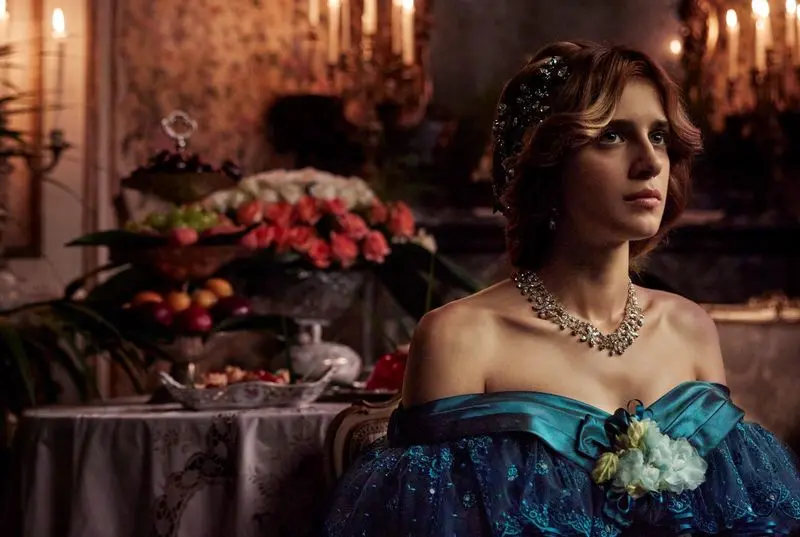
Copyright: Netflix/Lucia Iuorio
Benedetta Porcaroli
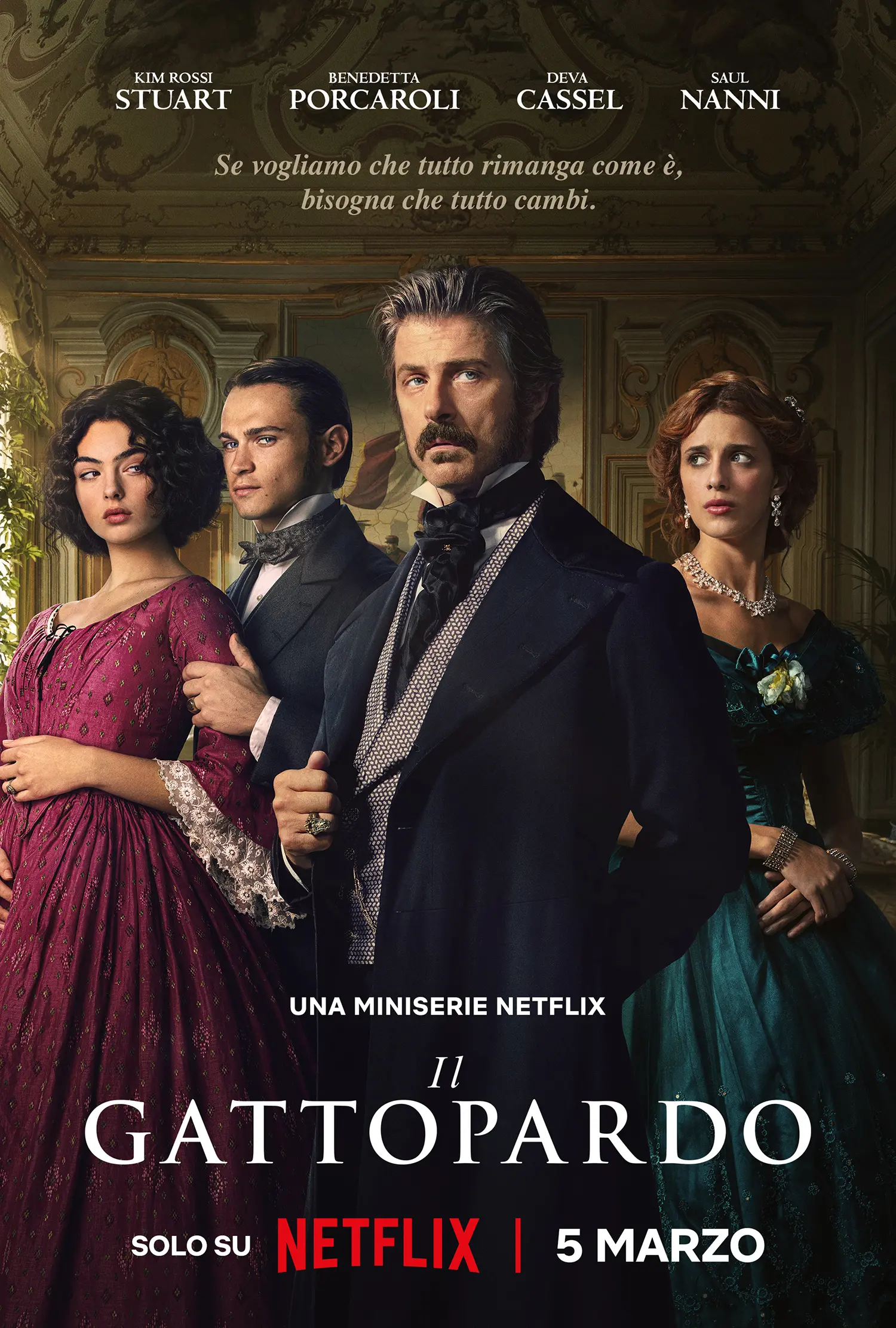
Don Fabrizio Corbera, Prince of Salina, lives a life of beauty and privilege. The aristocracy of Sicily, however, feels threatened by Italian unification and Fabrizio realizes that the future of his house and family is in danger. To avoid defeat, Fabrizio is forced to form new alliances even if this means going against his principles, until he finds himself faced with a seemingly impossible choice. Don Fabrizio has the power to organize a marriage that will save the future of his family, between his nephew Tancredi and rich, beautiful Angelica. But doing so would break the heart of his beloved daughter Concetta.