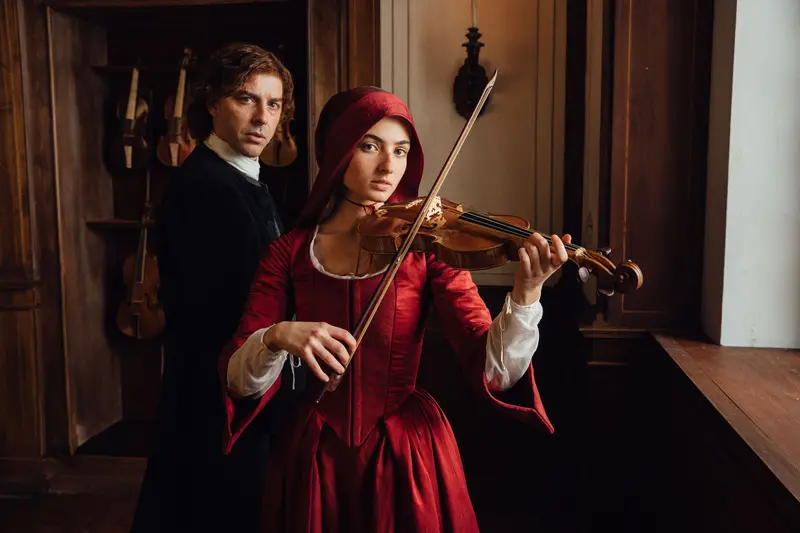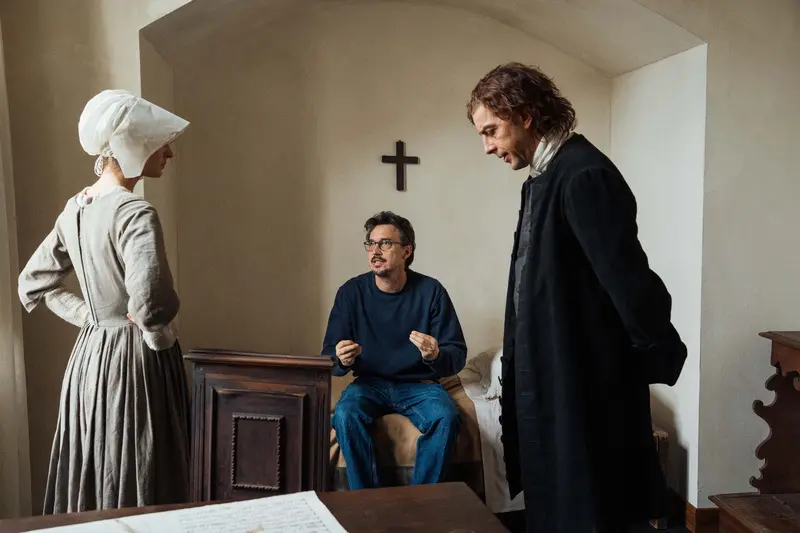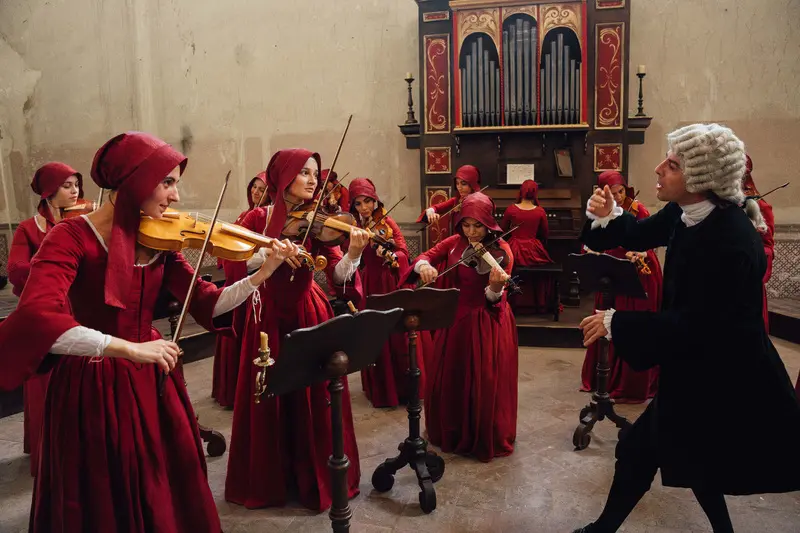
Damiano Michieletto, visionary opera director, makes his feature film debut with Primavera, set in early 18th-century Venice, telling the story of a phase in the life of Antonio Vivaldi when, newly ordained, the master of Italian Baroque music was hired by the Ospedale della Pietà in Venice. The institution housed abandoned orphans, teaching the most talented girls music in preparation for the orchestra and choir of the Pietà.
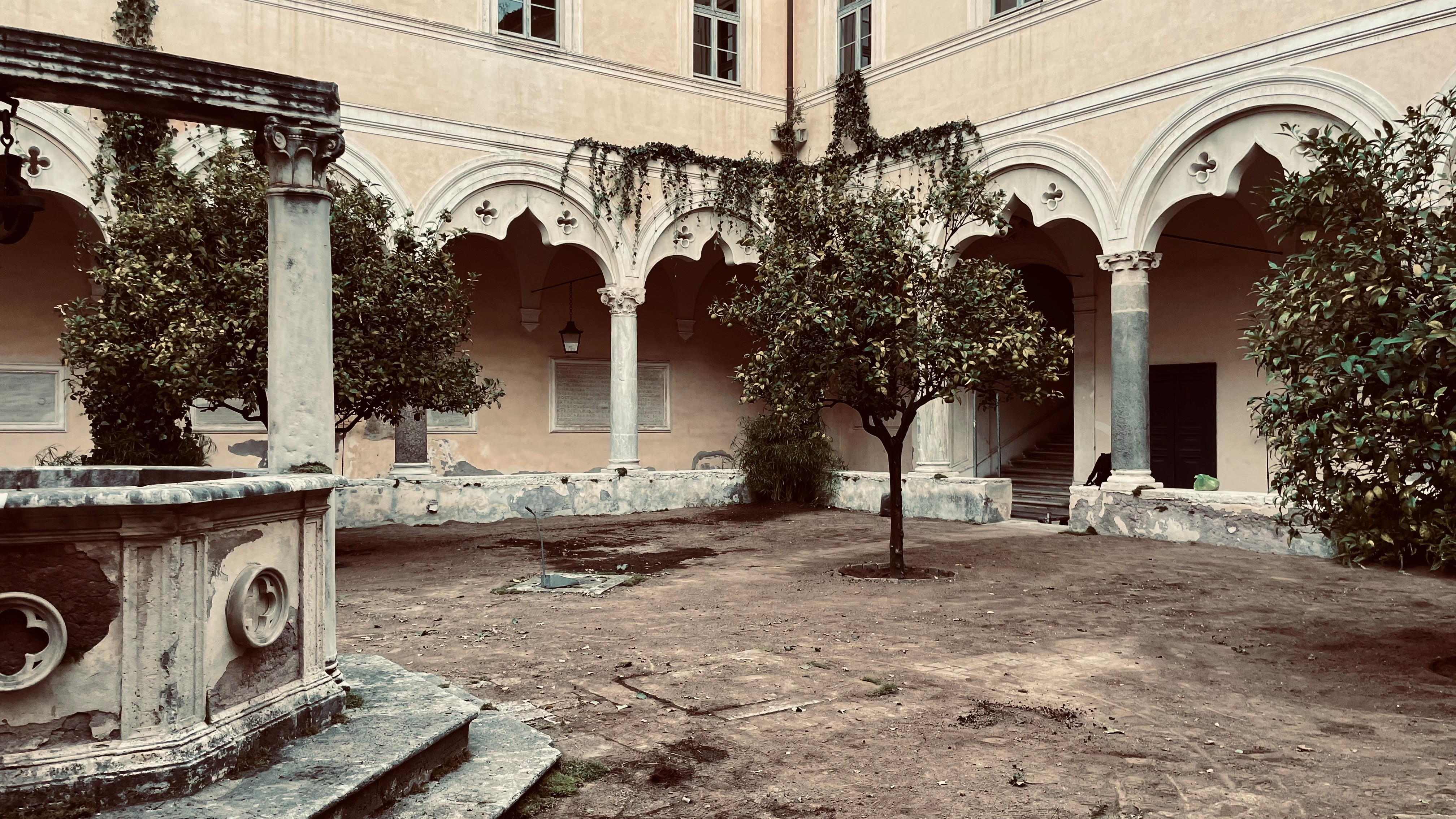
The Pio Ospedale della Pietà functioned as convent, orphanage, and conservatory, providing shelter, education, and a trade to the children living there. Tecla Insolia plays Cecilia, a student with a special talent for the violin.
The cloister is seen throughout the film, several times with the young orphans moving through it: however, it does not actually exist. It is actually the result of set designer Gaspare De Pascali’s transformation of the Roman cloister of Sant'Alessio sull'Aventino (actually the Basilica of Saints Boniface and Alexis) into a Venetian-style building, with Arabic-style arches.
The Pietà is seen from the outside during a concert organized to celebrate the capture of Corfu by the Venetian Republic; here "played" by another Venetian building, the Church of Santa Giustina in the Castello district, founded in the Middle Ages and deconsecrated in 1810.
Although the events take place inside the Pietà, the characters travel for concerts to many locations in Venice and the lagoon: including Palazzo Widmann on calle Larga Widmann; the White Rabbit on fondamenta de la Sensa; ponte Donà, rio Santa Giustina, rio dell'Arsenale, rio dei Gesuiti, and a country farmhouse near valle da pesca Perini.
A key location near Rome was Vicovaro, in particular, piazza San Pietro and the interior of the Parish of St. Peter the Apostle, plus other corners of the historic centre.
Another setting was Palazzo Taverna, in the heart of Rome's Ponte district, which was transformed into a noble residence on the Grand Canal used in the scene where Elisabetta (Valentina Bellè) is chased through the halls of the Baroque wing while the Pietà musicians are performing in the classic Venetian mask that conceals their identity. Thanks to the magic of blue screen technology, water can be seen through the windows.
With his fame peaking in the early 18th century, Vivaldi struggled to stage his works after 1730, when musical tastes began to change. He died in solitude and poverty, and was buried in a mass grave. His work was shrouded in oblivion for nearly two centuries, until the early 20th century, when the chance rediscovery of a large number of manuscripts rekindled attention in this extraordinary composer.
Also in news:
Damiano Michieletto, visionary opera director, makes his feature film debut with Primavera, set in early 18th-century Venice, telling the story of a phase in the life of Antonio Vivaldi when, newly ordained, the master of Italian Baroque music was hired by the Ospedale della Pietà in Venice. The institution housed abandoned orphans, teaching the most talented girls music in preparation for the orchestra and choir of the Pietà.
The Pio Ospedale della Pietà functioned as convent, orphanage, and conservatory, providing shelter, education, and a trade to the children living there. Tecla Insolia plays Cecilia, a student with a special talent for the violin.
The cloister is seen throughout the film, several times with the young orphans moving through it: however, it does not actually exist. It is actually the result of set designer Gaspare De Pascali’s transformation of the Roman cloister of Sant'Alessio sull'Aventino (actually the Basilica of Saints Boniface and Alexis) into a Venetian-style building, with Arabic-style arches.
The Pietà is seen from the outside during a concert organized to celebrate the capture of Corfu by the Venetian Republic; here "played" by another Venetian building, the Church of Santa Giustina in the Castello district, founded in the Middle Ages and deconsecrated in 1810.
Although the events take place inside the Pietà, the characters travel for concerts to many locations in Venice and the lagoon: including Palazzo Widmann on calle Larga Widmann; the White Rabbit on fondamenta de la Sensa; ponte Donà, rio Santa Giustina, rio dell'Arsenale, rio dei Gesuiti, and a country farmhouse near valle da pesca Perini.
A key location near Rome was Vicovaro, in particular, piazza San Pietro and the interior of the Parish of St. Peter the Apostle, plus other corners of the historic centre.
Another setting was Palazzo Taverna, in the heart of Rome's Ponte district, which was transformed into a noble residence on the Grand Canal used in the scene where Elisabetta (Valentina Bellè) is chased through the halls of the Baroque wing while the Pietà musicians are performing in the classic Venetian mask that conceals their identity. Thanks to the magic of blue screen technology, water can be seen through the windows.
With his fame peaking in the early 18th century, Vivaldi struggled to stage his works after 1730, when musical tastes began to change. He died in solitude and poverty, and was buried in a mass grave. His work was shrouded in oblivion for nearly two centuries, until the early 20th century, when the chance rediscovery of a large number of manuscripts rekindled attention in this extraordinary composer.
Also in news:

Early 1700s. The Ospedale della Pietà is the largest orphanage in Venice, an institution that also introduces the brightest orphans to the study of music with its orchestra one of the most esteemed in the world. Twenty-year-old Cecilia, who has lived at the Pietà all her life, is an extraordinary violinist. Art has opened her mind, but not the doors of the orphanage; she can perform only there, behind a screen, for wealthy patrons. That is until a spring breeze suddenly shakes her life, everything changes with the arrival of a new violin teacher. His name is Antonio Vivaldi.
Do you want to be deleted? Send an email to: info@italyformovies.it
Do you want to be deleted? Send an email to: info@italyformovies.it